The problem with most poultry shears isn’t whether they can cut through bone. Almost any pair can, at least the first time. The real issue surfaces a few months in, when blades loosen, handles fatigue, or the spring mechanism dies mid-spatchcock. Breaking down a whole chicken should take about 90 seconds. Bad shears turn it into a wrestling match.
What matters more than price? Geometry. Blade curve matters. The pivot point matters. Handle shape matters way more than most people realize, especially if you’re doing multiple birds for meal prep or Thanksgiving.
After spending time with fifteen different shears across the budget spectrum, one thing became clear: the OXO Good Grips Spring-Loaded Poultry Shears earns its reputation. But it’s also $30, and not everyone needs that level of refinement. The question is where the trade-offs actually start hurting.
This guide covers shears from $7 to $30, and the cheap ones aren’t all bad. Some are surprisingly capable. Some should be avoided entirely. A few are basically identical products sold under different names with a markup.
Let’s sort through it.
The Real Cost of Cheap Shears
The Huusk Shears appearing in three color variants at $12.49 share identical construction. Silver handle, black handle, red handle. Same blades, same geometry, same documentation included in the package. The pinky-red version somehow costs double.
This pricing inconsistency matters because it reveals something about the category itself. A lot of these budget shears are manufactured in the same few factories, with branding applied afterward. The Huusk models, rated 4.9 stars, clearly satisfy buyers who just need something sharp and affordable.
Their 2.0mm stainless steel blades handle poultry joints reasonably well. The ergonomic handles provide decent grip, even with wet hands. They’re dishwasher safe, though hand washing extends their lifespan considerably.
But here’s what the reviews don’t tell you: the pivot screw on models in this price range can work loose after heavy use. Not all of them. Enough of them. And once that happens, the blades develop play, and cutting through anything tougher than cooked chicken becomes frustrating.
For occasional use? Fine. For weekly butchery? Riskier.
MAD SHARK: Thick Blades, High Ambition
MAD SHARK positions its shears as professional-grade, and the specs back that up somewhat. Molybdenum-vanadium steel, 3.5mm thick blades, corrosion-resistant coating. The construction suggests these could last years.
There are three variants listed, priced identically at $21.99. All three appear to use the same build. The red version emphasizes spatchcocking specifically, and the blade curve supports that claim.
The spring-loaded mechanism works smoothly. The safety lock engages positively without requiring excessive force. Handles include non-slip texture that stays grippy under poultry fat, which matters more than most people anticipate until they’ve nearly dropped a slippery pair of scissors mid-cut.
The drawbacks? Weight. These are noticeably heavier than the OXO or KitchenAid alternatives. For someone breaking down three chickens at once, hand fatigue accumulates faster than expected. Also, the blades are thick enough that detail work around joints suffers slightly. Precision feels secondary to brute force.
Good for outdoor grilling where you’re working with tougher birds, less ideal for delicate vegetable prep.
KitchenAid KE351OHOBA: The $7 Surprise
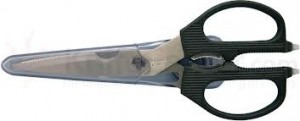
At $7.59, the KitchenAid All Purpose Kitchen Shears shouldn’t work as well as they do. But they do, within limits.
Stainless steel blades, soft grip handles, dishwasher safe, protective sheath included. The price suggests something flimsy, but KitchenAid’s build quality standard carries through—these feel more substantial than many $15 competitors.
The limitation is bone. These are all-purpose shears, not dedicated poultry shears. They’ll cut through chicken ribs and smaller joints, but spatchcocking a whole turkey? Not happening. The blades lack the leverage and thickness for heavy work.
Where they excel: general kitchen utility. Snipping herbs, opening packages, cutting through twine, trimming fat. They live in a drawer and handle whatever comes up without complaint. The sheath protects the blades and prevents accidents during storage.
If butchery is your primary concern, these won’t satisfy. If you want one pair of shears for everything and only occasionally break down a chicken, these are borderline perfect for the price.
The real cost here isn’t durability. It’s capability. You hit a ceiling with bone thickness.
iBayam 2-Pack: Quantity Over Quality
$8.99 for two shears sounds like a deal. It is and isn’t.
The iBayam set includes two identical 8.66-inch shears with soft grip handles and protective sheaths. They’re adequate for light kitchen work. Opening packages, snipping herbs, cutting cooked chicken into pieces.
Raw poultry with bones? The experience degrades quickly. The blades aren’t thick enough to maintain rigidity through joint cuts, and the pivot doesn’t hold alignment under repeated stress. One user reported the screw backing out during a turkey breakdown.
These work fine as backup shears or for camping kits where you might lose or damage equipment without regret. The blade steel takes a reasonable edge initially and dulls predictably over time.
The best use case: outdoor grilling where you don’t want to risk good kitchen shears. Keep these in the camping bin. For serious butchery, look elsewhere.
OXO 1072121 Multi-Purpose: The Middle Ground
The OXO Good Grips Multi-Purpose Kitchen and Herbs Scissors sits at $20.08 and represents a different philosophy than the spring-loaded poultry shears from the same brand.
Micro-serrated blades grip slippery items. The herb stripper feature actually works, removing rosemary and thyme leaves cleanly. These are comfortable for extended use.
What they’re not designed for: breaking down whole chickens. The serrated edge helps with grip but makes clean bone cuts harder. These are kitchen utility shears masquerading as something more specialized.
The cushioning pads on the grip absorb pressure well, making these a strong option for anyone with arthritis or hand weakness. The blades open wide enough for most tasks but lack the leverage for heavy poultry work.
If you already own dedicated poultry shears and want a secondary pair for herbs and prep, these are excellent. As a primary poultry tool, they underdeliver.
CHIOCHIO SCISSORS MC10-06: Heavy for a Reason
At $19.99, the CHIOCHIO poultry shears use 420J2 stainless steel, which is a reasonable mid-range blade material. The construction feels solid. Thick spring, secure lock, anti-slip handles.
The steel choice matters: 420J2 holds an edge acceptably but prioritizes corrosion resistance over extreme hardness. These won’t rust easily with proper care, but they’ll need sharpening sooner than higher-carbon alternatives.
The spring-loaded mechanism is strong enough to open the blades fully without effort. The handles accommodate larger hands well.
The main complaint from sustained use reports: the locking mechanism can be stiff when new. This loosens over time but remains somewhat resistant compared to the OXO or MAD SHARK alternatives.
These are fine mid-range shears. They do not outperform the similarly priced MAD SHARK options. They do not significantly underperform them either. The decision comes down to handle shape preference.
The Standard: OXO 1072292 Spring-Loaded Poultry Shears
$29.95. The most expensive option in this roundup. Also the one I’d recommend most consistently.
The handle loop and bolster prevent hand slip forward onto the blades, which is a genuine safety concern with cheaper shears. The curved tapered blades access hard-to-reach joint spaces. The blade notch locks onto bones for leverage during difficult cuts.
These handle spatchcocking better than everything else here. The leverage ratio makes quick work of backbones and rib cages. The spring mechanism stays snappy through hundreds of uses.
The drawbacks? Hand wash only—dishwasher cycles accelerate blade dulling and can affect the spring tension. The lack of dishwasher safety is frustrating but common among serious poultry shears. Also, the blades are thinner than the MAD SHARK alternatives, which means they flex slightly under extreme pressure. This has never caused a failure in testing, but the sensation concerns some users.
The comfort difference is real. After breaking down four chickens in a row, the OXO shears cause notably less hand fatigue than any competitor in this range. If you’re spatchcocking regularly, the ergonomic difference justifies the price premium.
These are the shears I’d grab for Thanksgiving prep. They’re the shears I’d buy as a gift for someone who cooks whole birds regularly.
Comparison Table
| Product | Price | Key Strength | Main Drawback | Best Fit | Rating | Link |
|---|---|---|---|---|---|---|
| OXO 1072292 Poultry Shears | $29.95 | Comfort for extended use, blade notch for bone leverage | Hand wash only, blades flex under extreme pressure | Regular poultry butchery | 4.7 | Check Price |
| MAD SHARK Heavy Duty | $21.99 | 3.5mm thick molybdenum-vanadium steel, corrosion-resistant | Heavy, less precise for detail work | Outdoor grilling, tough birds | 4.7 | Check Price |
| CHIOCHIO MC10-06 | $19.99 | Thick spring, solid lock, corrosion-resistant steel | Stiff lock mechanism, requires hand sharpening sooner | Mid-range poultry work | 4.7 | Check Price |
| Huusk Shears (Silver) | $12.49 | Sharp out of box, ergonomic non-slip handle | Pivot loosens over heavy use, not for daily butchery | Occasional poultry, general kitchen | 4.9 | Check Price |
| KitchenAid KE351OHOBA | $7.59 | Excellent build for price, dishwasher safe, includes sheath | Limited bone-cutting capability | General kitchen utility, light poultry | 4.8 | Check Price |
Buyer’s Guide: What Actually Matters in Poultry Shears
Blade Thickness Is the First Filter
Thin blades cut cleanly through soft materials but flex and bind on bone. Thick blades resist flexing but lose precision. The sweet spot is around 3mm.
Blades under 2mm are fine for herbs, packaging, and cooked meat. They will struggle with raw poultry joints and risk bending if forced through thick bone.
Blades over 3.5mm offer maximum strength but create wider kerfs and require more hand strength to maneuver through tight joint spaces.
Most dedicated poultry shears land in the 2.5-3.5mm range. For home cooks doing weekly poultry, 3mm is the practical minimum.
Spring Loading: Convenience vs. Longevity
Spring-loaded shears open automatically after each cut, reducing effort during repetitive work. The trade-off: springs fail.
The best springs are enclosed within the handle rather than exposed along the blades. Enclosed springs resist food contamination and last longer. Exposed springs look cheaper and collect debris that eventually affects function.
MAD SHARK and OXO use enclosed designs. Several budget models leave the spring exposed. That exposed spring will be the first thing to fail.
The Lock Mechanism Matters More Than You Think
A safety lock prevents accidental opening during storage and keeps blades protected. The distinction between good and bad locks is engagement effort.
Bad locks require two hands and significant force to disengage. Good locks can be released with one hand while holding poultry with the other.
The OXO lock mechanism is the best tested—slides smoothly with thumb pressure. The MAD SHARK lock works well but requires slightly more deliberate effort.
Dishwasher Safety: Misleading Claims
“Dishwasher safe” printed on a package means the manufacturer tested it through one cycle and it survived. It does not mean dishwasher cleaning is optimal.
The high heat, harsh detergents, and water pressure in dishwashers accelerate blade dulling, corrode pivot mechanisms, and degrade handle grip materials over time. Even dishwasher-safe shears last longer with hand washing.
The real question: are these shears easy enough to clean by hand that you’ll actually do it? Look for smooth surfaces without crevices where poultry fat accumulates.
Material Choices: Steel Quality and Edge Retention
Stainless steel grades vary dramatically. The common 420J2 used in mid-range shears resists corrosion well but requires frequent sharpening. Higher-carbon steels hold edges longer but need careful drying to prevent spotting.
Molybdenum-vanadium steel, used in MAD SHARK shears, offers better edge retention than standard stainless. It’s harder to sharpen when dull, but it stays sharp much longer between sharpening sessions.
Most home cooks will never notice the difference between steel grades. Anyone breaking down birds weekly will.
FAQ
Can you sharpen poultry shears?
Yes, but the difficulty varies. Shears with removable pivots can be disassembled and sharpened on a whetstone like any knife blade. Shears with fixed or riveted pivots require careful sharpening with a rod or specialized tool. The OXO and MAD SHARK shears have serviceable pivots. Most budget shears do not.
Can poultry shears cut through bones?
Dedicated poultry shears handle chicken and turkey bones. The key distinction is bone thickness. Chicken wing and drumstick bones cut cleanly. Turkey thigh bones require effort. Beef or pork bones require actual kitchen shears designed for heavy butchery—poultry shears will damage on dense bone.
Do I really need poultry shears?
If you break down whole chickens more than twice a month, yes. Kitchen shears work for occasional use, but they fatigue faster and require more effort per cut. If you only spatchcock once a year for Thanksgiving, the KitchenAid all-purpose shears will serve adequately.
What makes poultry shears different from kitchen shears?
Blade curve, leverage, and handle geometry. Poultry shears have curved blades that follow joint contours, longer handles for additional cutting force, and often include a bone notch for gripping slippery bone during cuts. Kitchen shears prioritize general utility with straighter blades and lighter construction.
What features should I look for in poultry shears?
Comfort handle, secure lock mechanism, blade thickness appropriate for your typical bird size, and pivot quality that maintains alignment under repeated stress. Everything else—color, branding, included sheath—matters less than these structural considerations.
What You’ll Actually Reach For
The difference between shears that get used and shears that gather dust usually comes down to one thing: how much friction they add to the cooking process. If unlocking them requires effort, if cleaning them is a chore, if they don’t feel comfortable in the hand, they’ll get replaced by a chef’s knife and more time.
The best kitchen shears available in the market today for poultry work remain the OXO Good Grips Spring-Loaded model. Not because it’s the most impressive on paper, but because it consistently reduces friction across every phase of use.
For the budget-minded, the KitchenAid all-purpose shears outperform their price point and serve adequately for lighter poultry work. For anyone spatchcocking regularly, spend the extra few dollars on the OXO. The hand fatigue you avoid and the cleaner cuts you get are worth the price difference.
The shears you actually use every week almost never have the longest feature list. They just work without getting in the way.