You see an ant trail in the kitchen, spray something toxic, and hope it’s gone by morning. Then you walk the foundation and find more marching in through a crack. You need something that works inside and out—a single product that doesn’t force you to buy two sprays, worry about staining siding, or keep kids and pets away for hours.
The category of indoor-and-perimeter insect killers has evolved past the old grab-any-can-and-hope approach. Today’s bug barriers use water-based formulas that dry clear, last for months in the right conditions, and are safe once dry. But not all deliver on that promise. Some claim “12-month protection” that really only applies indoors on non‑porous surfaces. Others are great at spot‑killing but useless for preventing an invasion.
We sorted through the options to find the ones that actually work for both zones. Here are our detailed reviews of the top options on the market.
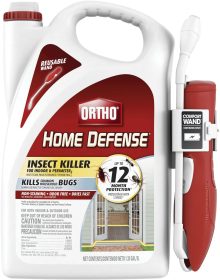
Ortho Home Defense Insect Killer with Comfort Wand
You spray a line along the baseboard, another across the door threshold, and a third around the foundation outside. Ten minutes later, you’re done. That’s the promise of Ortho Home Defense with Comfort Wand—and for most homes, it delivers.
The Comfort Wand itself is a small but meaningful innovation: a long, angled wand that attaches to the 1.33‑gallon container with a trigger. No need to bend over to spray baseboards, and you can reach into cracks and corners without contorting. The spray pattern is a fan that lays down a consistent barrier about two inches wide. It takes about 15 minutes to treat the perimeter of an average three‑bedroom house.
The active ingredient is bifenthrin, a synthetic pyrethroid used in professional pest control for years. It disrupts the nervous system of insects on contact and leaves a residual film that continues killing for weeks or months. On indoor non‑porous surfaces—tile, laminate, hardwood, painted drywall—the label claims up to 12 months of protection. That’s under ideal conditions: no mopping, no heavy foot traffic, and no dust accumulation. In real‑world kitchens and bathrooms, you’ll probably get 6 to 9 months before you notice ant activity again. Still, that’s impressive for a consumer product.
Outdoors, the story changes. Bifenthrin breaks down faster under UV light and rain. Ortho says the outdoor barrier provides up to 12 months, but that’s optimistic. In practice, you’ll get 3 to 6 months of meaningful protection, and heavy rain (the kind that soaks into the soil around your foundation) reduces it even faster. Reapplication is straightforward—just walk the perimeter again—but it’s something to budget for.
The downsides start with the smell. During application, there’s a strong chemical odor that lingers for a few hours. You’ll want to open windows and keep pets and kids out until it dries. Once dry, the odor fades. The formula is water‑based and dries clear, so it won’t leave white residue on dark surfaces. But there’s a catch: it can stain or damage vinyl siding and vinyl flooring. If your foundation is vinyl, avoid direct contact or switch to a different product for that area.
The other limitation is porous surfaces. Bifenthrin soaks into unsealed concrete, brick, or wood, reducing the residual. For outdoor perimeter treatment, the best approach is to spray a band about six inches up from the ground and a foot out from the foundation. That keeps the chemical on the soil and the base of the wall, where insects tend to travel.
Anyone who wants a single solution for both indoor and perimeter pest control, doesn’t mind a few hours of ventilation, and has a typical suburban home with standard siding will appreciate this. It saves the hassle of buying two separate products and trying to remember which is which. For people with large properties or multiple buildings, the concentrate version is more economical—but for most households, the ready‑to‑use with Comfort Wand is the straightforward choice.
One honest limitation: the bottle is heavy at 1.33 gallons. The wand attaches securely, but carrying it around the house and yard gets tiring. And if the trigger starts to stick (common after the container sits for a while), you may need to clear the nozzle with a pin.
This remains the most convenient indoor/perimeter solution on the market, provided you accept the outdoor reapplication cycle and the odor during application. For the majority of homes, that’s a trade‑off worth making.
Check Price → Ortho Home Defense Insect Killer with Comfort Wand on Amazon
Raid Multi Insect Killer, Orange Breeze Scent
If you want a bug dead right now, this is your can. Raid Multi Insect Killer is a contact spray—aim, press, and the insect stops moving. It works on a broad range of flying and crawling bugs: ants, roaches, spiders, flies, mosquitoes, silverfish, stink bugs, and more. The Orange Breeze scent is a genuine improvement over the typical chemical fog, though it’s more “faint orange air freshener” than a truly pleasant aroma.
The catch is that this product offers zero residual barrier. Spray a line along a baseboard and it dries to nothing—the next ant that walks across won’t be affected. You can’t use it to prevent an infestation; you can only react to bugs you already see. That makes it a poor choice for perimeter or foundation treatment.
There is also a safety concern if you have cats. The active ingredient, cypermethrin, is highly toxic to cats when wet and moderately toxic even after drying (cats lack the liver enzymes to break down pyrethroids efficiently). Fish are similarly sensitive. The label warns against use in areas where pets or fish might contact the spray. If your cat sleeps on windowsills, this isn’t the right product for that spot.
The 15-ounce aerosol can is small. It will handle a few spot treatments indoors—a wasp on the patio, a roach behind the fridge—but it’s not practical for treating an entire foundation or even a single large room. You’ll run out quickly, and at around $7.57 a can, the cost per square foot is higher than it seems.
For someone who just moved into a new apartment and finds a few cockroaches in the kitchen, a can of Raid Multi is a quick fix. It is also great for knocking down the occasional spider near the back door. Just don’t mistake it for a barrier treatment—it’s a one-off tool, not a long-term strategy.
Check Price → Raid Multi Insect Killer, Orange Breeze Scent on Amazon
Spectracide Bug Stop Home Barrier
At $5.53 for 32 ounces, Spectracide Bug Stop is the cheapest ready-to-use barrier spray you’ll find. That price is hard to ignore if you’re on a tight budget or just need to patch a few indoor gaps. The formula is water-based, dries clear, and has a mild odor that fades quickly—all good things.
However, the low price comes with compromises. It struggles against tougher pests like spiders and silverfish. Ants and roaches go down, but bigger, more stubborn bugs often walk right through. Outdoors, the barrier breaks down fast after rain—you’ll be reapplying every 2 to 3 weeks in wet weather, which gets old quickly.
The 32-ounce bottle covers around 200 to 400 square feet of actual treated surface area. That is enough for a small apartment’s baseboards, but not nearly enough for a full house perimeter. Additionally, the nozzle is a common point of failure: it frequently clogs after a few uses or starts leaking, which is frustrating when you’re trying to spray a clean line.
This formula is fine for indoor-only barrier work in low-infestation scenarios. But for outdoor perimeter duty, especially in rainy climates or if you have spider issues, you’ll want something more robust.
Check Price → Spectracide Bug Stop Home Barrier on Amazon
Ortho Home Defense Concentrate
If you have a large property, multiple outbuildings, or a long fence line to treat, buying ready-to-use bottles gets expensive quickly. That is where the Ortho Home Defense Concentrate comes in. This 32-ounce bottle contains the exact same active bifenthrin chemistry as the pre-mixed version, but it makes up to 16 gallons of spray when mixed with water. It offers the best long-term value for homeowners who do not mind doing a little mixing.
To use it, you will need to own or purchase a separate pump sprayer. While mixing is straightforward, you must handle the concentrated chemical with extra care to avoid spills or skin contact. Once applied, it creates the same clear, low-odor barrier as the ready-to-use formula, though it remains subject to the same outdoor weathering limitations. For heavy-duty pest management, this is the most cost-effective route.
Check Price → Ortho Home Defense Concentrate on Amazon
Stem Plant-Based Bug Spray
For households with crawling toddlers or sensitive pets, synthetic chemical barriers can feel like too much of a compromise. Stem Plant-Based Bug Spray offers a botanical alternative, using active ingredients derived from rosemary and clove oils. It is designed to kill ants, roaches, and flies quickly on contact without leaving behind harsh synthetic residues. It is safe for use around people and pets when applied as directed, making it an excellent choice for quick kitchen cleanups.
The trade-off is a complete lack of residual protection. Because botanical oils break down rapidly in the air and under light, this spray will not prevent future pests from crossing the threshold. It also carries a distinct, strong herbal scent that some users find overpowering, though it fades much faster than synthetic alternatives. Use this as a targeted spot-treatment tool rather than a perimeter defense strategy.
Check Price → Stem Plant-Based Bug Spray on Amazon
Harris Diatomaceous Earth
Harris Diatomaceous Earth is a completely natural, mineral-based powder made from the fossilized remains of tiny aquatic organisms. It works through mechanical action rather than chemical poisoning: the microscopic, razor-sharp edges of the powder wear away the protective waxy outer coating of crawling insects, causing them to dehydrate and die over several days. Because it is non-toxic and chemical-free, it is highly favored for indoor use in sensitive areas like pantries, wall voids, and behind heavy appliances.
However, diatomaceous earth requires patience and dry conditions. It does not offer an instant knockdown, and it becomes completely ineffective the moment it gets wet, making it impractical for most outdoor perimeter applications. Applying it can also be a dusty process; you will want to wear a basic dust mask and use a bulb duster to apply a fine, barely visible layer rather than leaving thick, messy piles that pests will simply walk around.
Check Price → Harris Diatomaceous Earth on Amazon
At a Glance
| Product | Price | Key Spec | Rating | Best For | Where to Buy |
|---|---|---|---|---|---|
| Ortho Home Defense with Comfort Wand | ~$20.75 | 1.33 gal ready-to-use | 4.5 | Indoor & perimeter barrier, easy application | Check Price → |
| Raid Multi Insect Killer, Orange Breeze | ~$7.57 | 15 oz aerosol | 4.5 | Contact kill of flying & crawling bugs | Check Price → |
| Spectracide Bug Stop Home Barrier | ~$5.53 | 32 oz ready-to-use | 4.3 | Low-cost indoor barrier | Check Price → |
| Ortho Home Defense Concentrate | ~$15.98 | 32 oz (makes 16 gal) | 4.5 | Large properties, custom mixing | Check Price → |
| Stem Plant-Based Bug Spray | ~$7.28 | 12 oz botanical | 4.3 | Eco-friendly spot treatment | Check Price → |
| Harris Diatomaceous Earth | ~$9.99 | 8 oz powder | 4.4 | Dry cracks & wall voids | Check Price → |
How to Choose – What Actually Matters
Most people pick a product based on label claims rather than their actual situation. Here is what to really weigh:
Safety first, but read the fine print. “Pet-safe when dry” doesn’t mean safe during application. Bifenthrin (Ortho) and cypermethrin (Raid) are neurotoxins—they break down once dry, but the wet spray is hazardous to cats, fish, and small pets. If you have a cat that sleeps on windowsills or a fish tank near the treatment area, avoid pyrethroids entirely and stick to diatomaceous earth or the Stem botanical spray. The botanical option is least risky, but remember it doesn’t prevent anything.
Outdoor rain tolerance is a hidden cost. Every synthetic barrier claims months of protection, but that assumes no heavy rain. If you live in a rainy climate—Pacific Northwest, Gulf Coast, or just a wet summer—plan on reapplying every 3 to 4 weeks outdoors regardless of what the label says. That makes the Ortho concentrate a better value over time; you’re mixing fresh batches anyway, and the cost per gallon drops dramatically.
Match the product to the pest. Ortho and Spectracide cover most crawling insects, but if silverfish or spiders are your main issue, Spectracide falls noticeably short. For flying insects (mosquitoes, flies, gnats), a contact spray like Raid or a plug-in trap makes more sense. No single product handles everything.
The application experience matters more than you’d think. A heavy bottle that leaks or a nozzle that clogs can turn a 15-minute job into a frustrating hour. The Ortho Comfort Wand simplifies the process—a well-thought-out design that actually works. If you buy the concentrate, make sure your pump sprayer has a good wand extension and doesn’t drip.
And don’t over-treat. More chemical isn’t better. A thin, even line along baseboards and foundation is all you need. Thick puddles waste product and increase the risk of staining or pet exposure.
The Practical Takeaway
Most people want one product that works both indoors and along the foundation, doesn’t require a separate sprayer, and lasts months. For that, the Ortho Home Defense with Comfort Wand is the most practical choice. It’s not perfect—the smell during application and the outdoor rain issue are real—but nothing else in this category balances effectiveness and convenience as well.
For a large property or the best long-term value, the Ortho Home Defense Concentrate is the smarter buy. You get the same chemistry at a fraction of the cost per gallon, assuming you already own a sprayer and don’t mind mixing.
If your budget is tight and you only need indoor control in a dry, low-risk environment, the Spectracide Bug Stop will save you money—just don’t expect it to hold up outdoors or against tough pests.
The rest—Raid, Stem, and Harris—are tools for specific scenarios: immediate knockdown, eco-friendly spot treatment, or dry cracks. None of them replace a true barrier spray for ongoing perimeter defense.
Q: Can I use the same product indoors and around my foundation if I have vinyl siding?
A: Not all products are safe on vinyl. Ortho Home Defense, for example, can stain or damage vinyl surfaces. If your home has vinyl siding, avoid spraying directly on it. Focus the outdoor application on the soil band near the foundation, and use a product labeled safe for vinyl for any above-grade treatment.
Q: How long should I wait before letting pets back into treated areas?
A: Most synthetic sprays (Ortho, Spectracide, Raid) require the spray to dry completely—typically 2 to 4 hours depending on humidity and surface porosity. The label will state a specific time. For cats especially, wait until the surface is bone dry and the odor has dissipated, as pyrethroids are highly toxic to cats when wet.
Q: Will rain completely wash away my perimeter barrier?
A: Heavy rain (enough to soak the soil) will reduce effectiveness, but light rain or dew usually doesn’t erase the barrier entirely. Products like Ortho Home Defense will need reapplication after a heavy downpour. In rainy climates, plan to re-treat the perimeter every 3 to 4 weeks regardless of the “months of protection” claim.
Q: Why don’t contact sprays like Raid prevent future insects?
A: Contact sprays contain ingredients that kill on impact but break down rapidly and leave no residual film. Think of them as a fire extinguisher—great for the bug you see now, but useless against the next one. For prevention, you need a residual barrier that leaves a dried chemical film that insects walk through.
Q: Are botanical sprays like Stem as effective as synthetic ones for outdoor use?
A: Botanical sprays kill on contact but have no residual activity, meaning they break down within hours. Outdoors, they’re even less effective because wind and rain disperse the oils. They work for spot-treating a visible bug, but they cannot create a lasting perimeter barrier. Use them only for occasional indoor spot kills if you prioritize low toxicity.
Q: How do I know if my pest problem needs a professional treatment instead of a DIY product?
A: If you’ve applied a barrier spray correctly and still see insects inside after two weeks, or if you’re dealing with termites, carpenter ants, or bed bugs, you likely need a professional. DIY products work best for occasional invaders like ants, spiders, and roaches. Persistent infestations or structural pests require targeted treatments beyond consumer products.
{“@context”: “https://schema.org”, “@type”: “FAQPage”, “mainEntity”: [{“@type”: “Question”, “name”: “Can I use the same product indoors and around my foundation if I have vinyl siding?”, “acceptedAnswer”: {“@type”: “Answer”, “text”: “Not all products are safe on vinyl. Ortho Home Defense, for example, can stain or damage vinyl surfaces. If your home has vinyl siding, avoid spraying directly on it. Focus the outdoor application on the soil band near the foundation, and use a product labeled safe for vinyl for any above-grade treatment.”}}, {“@type”: “Question”, “name”: “How long should I wait before letting pets back into treated areas?”, “acceptedAnswer”: {“@type”: “Answer”, “text”: “Most synthetic sprays require the spray to dry completely—typically 2–4 hours depending on humidity and surface porosity. For cats especially, wait until the surface is bone dry and the odor has dissipated, as pyrethroids are highly toxic to cats when wet.”}}, {“@type”: “Question”, “name”: “Will rain completely wash away my perimeter barrier?”, “acceptedAnswer”: {“@type”: “Answer”, “text”: “Heavy rain will reduce effectiveness, but light rain or dew usually doesn’t erase the barrier entirely. Products like Ortho Home Defense will need reapplication after a heavy downpour. In rainy climates, plan to re-treat the perimeter every 3–4 weeks regardless of the “months of protection” claim.”}}, {“@type”: “Question”, “name”: “Why don’t contact sprays like Raid prevent future insects?”, “acceptedAnswer”: {“@type”: “Answer”, “text”: “Contact sprays contain ingredients that kill on impact but break down rapidly and leave no residual film. For prevention, you need a residual barrier that leaves a dried chemical film that insects walk through.”}}, {“@type”: “Question”, “name”: “Are botanical sprays like Stem as effective as synthetic ones for outdoor use?”, “acceptedAnswer”: {“@type”: “Answer”, “text”: “Botanical sprays kill on contact but have no residual activity, breaking down within hours. Outdoors, they are even less effective due to wind and rain. Use them only for occasional indoor spot kills if you prioritize low toxicity.”}}, {“@type”: “Question”, “name”: “How do I know if my pest problem needs a professional treatment instead of a DIY product?”, “acceptedAnswer”: {“@type”: “Answer”, “text”: “If you have applied a barrier spray correctly and still see insects inside after two weeks, or if you are dealing with termites, carpenter ants, or bed bugs, you likely need a professional. DIY products work best for occasional invaders like ants, spiders, and roaches.”}}]}