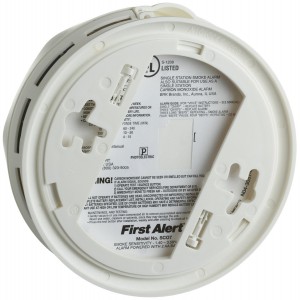
Most people don’t think about carbon monoxide detectors until someone mentions them, or until news breaks about an incident. That’s the problem with a gas that has no smell, no color, and no taste — you install a detector out of obligation, cross your fingers, and forget about it. But the differences between detectors actually matter. A lot.
The Kidde KN-COPP-3 is the best CO detector for most homes and offices in 2026. It combines a digital display, battery backup, and reliable electrochemical sensing at a price that doesn’t require justification. But depending on your space — whether it’s an open-concept office, a basement with a furnace, or a bedroom where silence matters — another option might serve you better.
This guide covers six of the most reliable detectors in the $20 to $70 range. Some are simple plug-in units. Others add digital readouts, gas detection, or smoke detection. One is portable. All of them use electrochemical sensors, which is the only technology worth buying for CO detection.
Quick Comparison
| Product | Price | Key Strength | Main Drawback | Best Fit | Rating |
|---|---|---|---|---|---|
| Kidde KN-COPP-3 | ~$33 | Digital display + battery backup | No gas detection | General home/office use | 4.7 |
| First Alert CO606 | ~$24 | Reliable battery backup | No digital display | Budget-conscious buyers | 4.7 |
| SITERWELL A4602A-7 | ~$21 | Plug-in simplicity | No battery backup | Travel or temporary spaces | 4.7 |
| Kidde KN-COB-LP2 | ~$24 | Fully portable, AA batteries | No digital display | Travel, camping, RVs | 4.7 |
| Kidde KN-COEG-3 | ~$57 | CO + explosive gas detection | Higher price | Homes with gas appliances | 4.6 |
| First Alert SMICO100 | ~$50 | 2-in-1 smoke + CO | Larger footprint | Bedrooms, hallways | 4.5 |
Kidde KN-COPP-3 — The One to Beat
The KN-COPP-3 is what most people should buy. It plugs into a standard outlet, includes a 9V battery backup, and has a digital display that shows CO levels in parts per million. That last feature is more useful than expected — seeing a steady zero on the display provides reassurance, and if levels start creeping up, the readout gives warning before the alarm sounds.
The digital display also shows error codes and end-of-life warnings. No guessing whether the unit is still working. The 85 dB alarm is loud enough to wake someone in an adjacent room, though not so piercing it causes panic.
One thing worth noting: the unit is slightly bulky. It protrudes from the outlet more than the First Alert CO606. In tight spaces behind furniture, this can be an issue. The green LED that indicates power is bright enough to be slightly distracting in a dark bedroom — some users report covering it with tape.
But for the combination of features and price, the KN-COPP-3 earns the top recommendation. It works in basements, bedrooms, offices, and living rooms. The battery backup means it keeps monitoring during power outages, which is when CO risks can actually increase (think generators running after a storm).
A small caution: the 9V battery needs replacing annually. Easy to forget. Set a calendar reminder.
Best for: Anyone who wants to see CO levels and doesn’t want to think about replacement for years.
First Alert CO606 — The Value Standard
The First Alert CO606 does almost everything the Kidde KN-COPP-3 does, minus the digital display. It plugs in, has a battery backup (AA batteries instead of 9V), and uses the same electrochemical sensor technology. The price difference is about $10.
Not having a digital display is more of a compromise than some realize. Without it, there’s no way to know if the unit is detecting low levels of CO or just sitting idle. The alarm only sounds at dangerous thresholds. Some people prefer this — less information, fewer things to worry about. Others find the lack of feedback unsettling.
The CO606 is slightly slimmer than the Kidde. It fits better in outlets behind nightstands or desks. The test/silence button is responsive, and the battery backup uses AA batteries, which are easier to find than 9V.
One frustration: the unit chirps when the battery is low, but there’s no way to tell whether the chirp means low battery or end-of-life without checking the manual. The pattern is different, but most people don’t memorize chirp patterns.
For the price, the CO606 is an excellent detector. It just lacks the feedback that makes the Kidde feel more trustworthy.
Best for: Buyers on a budget who want a name brand with reliable battery backup.
SITERWELL A4602A-7 — The Budget Travel Companion
The SITERWELL A4602A-7 is the cheapest detector worth buying. At roughly $21, it undercuts the First Alert and Kidde options while maintaining a 4.7 rating. But there’s a catch worth understanding.
This unit is plug-in only. No battery backup. If the power goes out, the detector stops working. That’s a significant limitation for a device meant to protect against a gas that becomes more dangerous during power outages (again, generators, space heaters, cars running in garages).
Where this detector shines is portability. It’s small, lightweight, and plugs directly into an outlet without the bulk of units with battery compartments. For travel — hotels, RVs, camping trips — it’s excellent. The folding plug design is genuinely convenient. Throw it in a bag, plug it in at the destination.
The sensor is electrochemical, which is the standard for accuracy. The alarm is loud enough. The unit meets UL standards.
But for permanent home or office installation, skipping the battery backup is a compromise. If power outages are rare in your area, and you have other detectors with battery backup elsewhere, this works as a secondary unit.
Best for: Travel, RVs, temporary spaces, or as a secondary detector in areas with stable power.
Kidde KN-COB-LP2 — Portable Protection That Works
Battery-powered detectors have a reputation for being less reliable than plug-in units. The Kidde KN-COB-LP2 doesn’t earn that criticism. It runs on two AA batteries, includes a test button, and has LED status indicators. The 85 dB alarm is comparable to plug-in models.
The big advantage is placement flexibility. No outlet required. Mount it on a wall, place it on a tabletop, bring it to a different room. For offices without accessible outlets, or for bedrooms where you don’t want cords, this is the solution.
The downside is battery life. Kidde claims the unit lasts about a year on a set of AA batteries. In practice, most users report replacing batteries every 10-12 months. The low-battery chirp starts about 30 days before the batteries die, which gives plenty of warning but can be annoying if the unit is in a hard-to-reach location.
No digital display. No battery backup (it IS the battery-powered unit, so that’s expected). Just reliable CO detection in a portable package.
One observation from user feedback: the unit is slightly less sensitive to slow CO buildup than plug-in models. This is a characteristic of battery-powered electrochemical sensors that prioritize battery life. In a fast CO leak, it responds quickly. For gradual accumulation, the response is slightly slower.
Best for: Spaces without easy outlet access, travel, or as a portable unit between locations.
Kidde KN-COEG-3 — When Gas Leaks Are a Concern
The KN-COEG-3 is the most specialized detector in this list. It detects carbon monoxide AND explosive gases (natural gas, propane). The digital display shows CO levels normally, but switches to display “GAS” when it detects explosive gas. The 9V battery backup is included.
For homes with gas furnaces, gas water heaters, gas stoves, or propane appliances, this combination makes sense. A gas leak is a different risk from CO poisoning, but both are serious. Having one device that covers both scenarios simplifies installation.
The price is higher — around $57 — but that’s still cheaper than buying separate CO and gas detectors. The unit is larger than standard CO detectors, which can make outlet placement awkward. The digital display is clear and responsive.
A few things to consider: the gas detection sensor has a shorter lifespan than the CO sensor. Kidde recommends replacing the unit after 5-7 years, while standard CO detectors typically last 7-10 years. The gas detection also requires the unit to be plugged in and within range of potential gas leaks, which means kitchen or utility room placement.
Best for: Homes with gas appliances, especially in basements or utility rooms where gas leaks and CO risks overlap.
First Alert SMICO100 — One Unit, Two Risks
Combination smoke and CO detectors are convenient, but they come with a trade-off. The SMICO100 is battery-operated, uses First Alert’s Precision Detection technology, and includes test/silence buttons. It’s designed to reduce nuisance alarms from cooking — a common complaint with combo units.
The Precision Detection technology works. The unit is less prone to false alarms from toast or bacon than older models. The CO detection uses the same electrochemical sensor found in standalone CO detectors.
The catch: if a combo unit fails, you lose both protections. And the installation requirements differ — smoke detectors should be on ceilings or high on walls, while CO detectors should be at breathing height. A single unit compromises on placement for one of the two functions. First Alert recommends wall mounting at 5 feet for this model, which is reasonable for CO but not ideal for smoke detection.
Battery life is approximately 10 years with the sealed lithium battery. No battery changes needed. The unit chirps when it reaches end of life, which is convenient but means replacing the entire unit.
Best for: Bedrooms or hallways where space is limited and you want both protections without installing two separate units.
Buyer’s Guide — What Actually Matters
Electrochemical sensors are the only option
CO detectors use either electrochemical sensors or biomimetic sensors. Electrochemical is better. It’s more accurate, responds faster, and doesn’t drift as much over time. Every detector in this guide uses electrochemical sensing. If you’re looking at a detector not on this list, check the sensor type before buying.
Battery backup isn’t optional
Here’s the scenario: a storm knocks out power. You run a generator in the garage or use a gas-powered space heater. The CO levels rise. Your plug-in detector is dead because the power is out.
Battery backup fixes this. The Kidde KN-COPP-3 and First Alert CO606 both include it. The SITERWELL A4602A-7 doesn’t. For a primary detector, battery backup should be non-negotiable.
Digital display — helpful or unnecessary?
A digital display shows CO levels in parts per million. This helps in two ways: it provides early warning before the alarm sounds, and it confirms the unit is actually working (showing a steady zero). Without the display, the unit only communicates through chirps and alarms.
The catch: the display is only useful if you check it. Most people install the detector and never look at it again. For them, a display is wasted cost. For people who want peace of mind, it’s worth every dollar.
Placement matters more than brand
A $50 detector in the wrong location is less effective than a $20 detector in the right location.
- Bedrooms: Install at breathing height (about 5 feet from the floor) outside sleeping areas.
- Basements: Near the furnace and water heater, but not directly next to them (avoid false alarms from dust).
- Garages: Inside the house, near the door to the garage, not inside the garage itself.
- Open-concept spaces: One detector per 1,000 square feet, placed centrally.
- Offices: Near HVAC returns or areas with gas appliances.
UL certification isn’t optional
All detectors in this guide meet UL 2034 (CO detectors) or UL 217 (smoke detectors). This certification is important because it guarantees the device has been tested for accuracy and response time. Any detector that doesn’t carry UL certification should be avoided, regardless of price.
The 10-year sealed battery trend
Several newer detectors (like the X-Sense SC07 and First Alert SMICO100) use sealed lithium batteries that last 10 years. When the battery dies, you replace the whole unit. This eliminates the “change the battery every year” chore, but it also means you can’t just swap batteries if the unit starts chirping in year three.
For people who forget to change batteries, sealed units are better. For people who want flexibility, replaceable batteries are better.
FAQ
Why are smoke and carbon monoxide detector ratings mostly positive?
Because the technology is mature. Electrochemical sensors have been refined over decades. The main differences between brands are in price, battery backup, digital displays, and form factor — not detection accuracy. Almost all UL-listed detectors from established brands detect CO within acceptable parameters. The ratings reflect that the basic function works reliably.
Where should I place a CO detector in a basement?
Near the furnace and water heater area, about 5 feet from the floor, and at least 10 feet away from the furnace itself to avoid dust triggering false alarms. If the basement has an attached garage, place a detector near the door to the garage.
What is the average level of carbon monoxide in homes?
Normal levels range from 0 to 9 ppm. Levels between 10 and 70 ppm indicate a problem that needs investigation. Levels above 70 ppm require immediate evacuation. Most detectors trigger an alarm at 70 ppm after 1-4 hours, or at higher concentrations much faster.
Can I use a portable CO detector in an office?
Yes, and it’s recommended if the office has gas heating, a gas water heater, or attached parking. The Kidde KN-COB-LP2 is ideal because it doesn’t require an outlet. Place it at desk level or on a shelf near the HVAC system.
How loud is the alarm in the Smoke & CO Detector?
Most detectors produce 85 dB at 10 feet. That’s loud enough to wake most sleepers but not deafening. Combination units (smoke + CO) often have slightly different alarm patterns for each risk. First Alert uses three beeps for smoke and four beeps for CO. Kidde uses similar patterns.
The Final Observation
The detector you install matters less than the detector you actually install. A $20 unit mounted correctly is better than a $60 unit sitting in a box. The Kidde KN-COPP-3 hits the sweet spot between features and price, but the First Alert CO606 gets close enough for $10 less. The SITERWELL works perfectly for travel but shouldn’t be the only detector in a home.
The real question isn’t which detector is best. It’s which detector will get installed, properly positioned, and maintained. Most people overestimate how much they’ll remember to test and replace batteries. If that sounds like you, choose a unit with a sealed 10-year battery and a loud end-of-life chirp. Then forget about it until year 10.
CO detectors don’t need to be complicated. They just need to be present, working, and in the right place. That’s the standard. Anything beyond that is convenience, not necessity.