Most bread machines claim they can turn out “artisan” loaves. Product pages promise crusty sourdough, fluffy brioche, and chewy ciabatta — all at the push of a button. But if you’ve tried a sub-$100 machine for anything beyond basic white bread, you know the gap between marketing and reality.
It’s not that bread makers can’t produce good bread. It’s that most aren’t built for the kind of bread many of us actually want to bake. Budget models rely on a single heating element in the bottom, so the top of your loaf stays pale while the bottom over-browns. They knead with one paddle that struggles to develop gluten in whole wheat or multigrain doughs. And “artisan” settings are often just the basic cycle with a different name.
This matters more now than it did five years ago. The pandemic-era sourdough trend wasn’t a phase — it permanently shifted how people think about bread. Google Trends shows interest in bread machine recipes has stayed elevated since 2020, but the biggest growth is in searches for “artisan bread machine,” “sourdough bread machine,” and “gluten-free bread maker.” People aren’t looking for another sandwich loaf. They want a machine that handles high-hydration dough, builds real gluten structure, and delivers a crust worth showing off.
But no single machine nails all of that at every price point.
After digging through hundreds of user reports, spec sheets, and long-term reliability data across the most popular models, one pattern emerged. The features that actually matter for specialty breads aren’t the ones brands shout loudest. Program count doesn’t matter if the heating elements can’t brown a crust evenly. A “gluten-free” setting is useless if temperature control is too imprecise for alternative flours. And a “sourdough” program on a machine with a single kneading paddle? You’re better off making the dough by hand.
This guide is built around that reality. It’s not a listicle of every bread machine under $200. It’s a focused look at five models, each solving a specific problem for a specific kind of baker. Some will surprise you with what they do well. All have a real limitation you need to know before buying.
Here are the machines we’ll cover:
- Zojirushi BB-PDC20BA Home Bakery Virtuoso Plus — the machine serious home bakers eventually graduate to, with dual heating and double kneading blades
- Hamilton Beach 29982 Automatic Bread Maker — the affordable workhorse for beginners who want a safe, straightforward machine without the hype
- KITCHENARM 85203 29-in-1 SMART Bread Machine — the variety machine for adventurous bakers who want to try 29 bread styles without spending much
Also worth a look (briefer mentions, but they deserve attention):
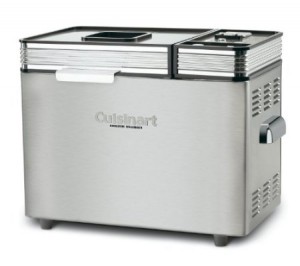
- Cuisinart CBK-200 Convection Bread Maker — a mid-range convection option for crispier crust without Zojirushi pricing
- KBS MBF-011 Convection Bread Maker (2LB) — the best value convection machine with a ceramic pan and quiet motor, if you can navigate its quirks
The rest of this guide gives you the real story on each one — what they do exceptionally well, what they do poorly, and who should actually buy them. No fluff, no marketing language.
Let’s start with the machine that changed my expectations for what a home bread maker can do.
You can tell you’re dealing with a different kind of machine the moment you lift it out of the box. The Zojirushi BB-PDC20BA Home Bakery Virtuoso Plus weighs nearly 20 pounds, most of it in the double-walled lid and hefty motor housing. This isn’t a machine you stash in a cabinet — it’s a countertop fixture, and it looks the part with brushed stainless steel and clean, no-nonsense lines.
But what matters is inside. Two kneading blades instead of one. A heating element in the lid in addition to the one at the bottom. A motor that can handle stiff whole wheat doughs without straining. These aren’t marketing bullet points — they’re engineering decisions that directly affect the bread you eat.
Consider the kneading. Most bread machines use a single paddle that drags through the dough, leaving pockets of unincorporated flour near the edges of the pan. The Zojirushi’s double blades work in tandem, pulling the dough toward the center and folding it repeatedly. That builds a more uniform gluten network — especially important for whole wheat, multigrain, and any dough with seeds or grains added. Loaves come out of this machine with a crumb structure that looks like it was shaped and proofed by hand: no dense streaks, no tunneling.
The dual heating matters just as much. In a standard bread maker, the only heat source is at the bottom, so the top of the loaf browns mainly from ambient heat inside the chamber. That’s why so many machine-baked loaves have a dark bottom and a pale, soggy top crust. The Zojirushi’s lid heater solves that. It bakes from both directions, producing an even golden-brown crust all the way around. For French bread and artisan-style loaves where crust is half the point, this makes a real difference.
The Virtuoso Plus also offers dedicated programs for multigrain, whole wheat, gluten-free, salt-free, sugar-free, and vegan breads — settings that aren’t just label swaps. Each one adjusts kneading time, rise temperature, and baking profile for that specific dough. The rapid cycles can bake a white or whole wheat loaf in 2 hours and 25 minutes, impressive for a machine that otherwise takes its time (the standard whole wheat cycle runs about 4 hours). And the delay timer works reliably, so you can set it up the night before and wake up to a hot loaf.
For all its strengths, there are two real frustrations.
First, the price. At around $455, the Virtuoso Plus costs more than three times as much as a capable budget machine. That’s a tough pill to swallow unless you’re already committed to regular bread baking. You should be making at least a loaf or two a week to justify it — otherwise the money is better spent on a mid-range convection model.
Second, and more annoying day-to-day: there’s no viewing window. You have to open the lid to check dough progress, which releases heat and interrupts the cycle. On a machine this precise, having to guess when the dough has risen properly feels like a step backward. The lid is also heavy, so cracking it open mid-cycle isn’t as casual as it sounds.
Loaf size options are limited to 1.5 and 2 pounds. No 1-pound loaf for smaller households, so you either make a full-sized loaf every time or scale recipes yourself — and the machine doesn’t handle scaled-down recipes as well.
Who should buy it: anyone who bakes at least twice a week, cares deeply about crumb and crust quality, and is willing to pay for reliability. The Zojirushi is built to last — owners routinely report 8–10 years of heavy use with no issues. Replacement parts are available. It’s not a beginner’s machine, but it might be the last bread machine a serious baker ever buys.
On the opposite end of the spectrum:
Hamilton Beach 29982 Automatic Bread Maker
This is the machine you buy when you want fresh bread without much thought. It costs around $110, has a PFAS-free nonstick pan — a genuine safety upgrade over older models — and comes with 14 settings including Basic, French, Whole Grain, Gluten-Free, and a quick 1-pound express cycle that bakes in under an hour.
The learning curve is nonexistent: add ingredients, pick a cycle, press start. The pan lifts out easily for cleaning, and the paddle pops off without a fight.
The limitations are real. The single kneading paddle can leave a streak of dry flour through the center of larger loaves, especially with whole wheat or high-hydration dough. Because there’s only one heating element at the bottom, the top crust often bakes up pale and soft — not the crackling golden finish you’d get from the Zojirushi or a convection model. The cycle timer isn’t always accurate; some users report the bread finishes a few minutes early or late.
Still, for basic white, whole wheat sandwich loaves, and occasional gluten-free bakes, it delivers exactly what it promises. It’s a simple, safe, reliable entry point. Just don’t expect artisan-quality crust. That’s not what it’s for.
KITCHENARM 85203 29-in-1 SMART Bread Machine
Twenty-nine programs. That’s more than any other machine here, and at around $105 it’s also one of the cheapest. Brioche, ciabatta, sourdough, keto, gluten-free, salt-free — the program list scrolls past like a bakery’s wish list. For someone who wants to experiment without committing to a $450 machine, the appeal is obvious.
The stainless steel body looks good. The customizable Home cycle genuinely gives you fine-grained control over each stage. And for the price, having even a passable sourdough setting is remarkable.
But there’s a catch: KITCHENARM isn’t a well-established brand. Quality control is inconsistent — some units arrive flawless, others have loose paddle mechanisms or unresponsive buttons. The viewing window is absent, so you’re guessing at dough progress by sound alone. And the included recipe booklet reads like it was translated by a committee that never met. You’ll likely end up using online recipes after a few tries.
Internally, the gears that drive the kneading paddle are plastic. Under heavy or frequent use, they may wear faster than the metal gears in the Zojirushi or Cuisinart. This isn’t a machine for someone who plans to bake every day.
It’s a machine for someone who wants to try everything once, learn what they like, and then decide if they want to upgrade. As a learning tool, it’s hard to beat. As a long-term investment, it’s a gamble.
Also Worth a Look
Cuisinart CBK-200 Convection Bread Maker – A solid mid-range option with actual convection airflow that produces noticeably crisper crusts than standard machines, at roughly half the Zojirushi price. It lacks dedicated sourdough and brioche cycles, so you’ll need to tweak the basic program for those.
KBS MBF-011 Convection Bread Maker (2LB) – The most affordable way to get convection plus a ceramic pan and a quiet 710W motor, all for around $140. The unresponsive touch panel and badly translated manual can turn setup into a patience test.
| Product | Price | Key Spec | Rating | Best For | Where to Buy |
|---|---|---|---|---|---|
| Zojirushi BB-PDC20BA Home Bakery Virtuoso Plus | ~$455 | Dual heaters, double kneading blades | 4.6 | Serious home bakers wanting artisan-quality crust and crumb | Check Price → |
| Hamilton Beach 29982 Automatic Bread Maker | ~$110 | PFAS-free pan, 14 settings including quick cycle | 4.4 | Beginners seeking simple, safe, reliable basic loaves | Check Price → |
| KITCHENARM 85203 29-in-1 SMART Bread Machine | ~$105 | 29 programs including brioche, ciabatta, keto | 4.6 | Adventurous beginners wanting to experiment with many bread types | Check Price → |
| Cuisinart CBK-200 Convection Bread Maker | ~$230 | Convection fan, 16 menu options | 4.4 | Bakers who want crispier crusts without spending $400+ | Check Price → |
| KBS MBF-011 Convection Bread Maker (2LB) | ~$140 | 360° convection, ceramic pan, 710W quiet motor | 4.4 | Value seekers wanting even baking and healthier non-stick | Check Price → |
Heating: The biggest difference nobody mentions
The most important feature for artisan-style bread isn’t the number of programs—it’s whether the machine has two heating elements, one at the bottom and one in the lid. A lid heater bakes the top crust evenly, giving you that golden-brown color without rotating the loaf. Without it, the top of your bread is always paler and softer than the bottom. If crust quality matters to you, this alone justifies the price jump.
Kneading: One blade vs. two
Single kneading paddles work fine for basic white bread and soft doughs. But for whole wheat, multigrain, or any recipe with seeds or grains, a single paddle often leaves unincorporated pockets. Double blades—like the Zojirushi’s—fold the dough inward more thoroughly, producing a more consistent crumb. If you bake hearty breads regularly, double blades are a real advantage.
Pan coating: Ceramic vs. traditional non-stick
Ceramic pans are marketed as healthier and more durable than PTFE-based non-stick coatings. In practice, ceramic can chip after a year or two if you’re not careful with metal utensils. Traditional non-stick pans (like the Zojirushi’s) are smoother and release bread easily, but they can scratch and degrade over time. In either case, avoid abrasive cleaning pads. What matters most is checking long-term user reports for the specific model—some brands’ pans hold up better than others.
Programs: More isn’t always better
Twenty-nine programs sound impressive until you realize most are just variations on the same basic cycle with minor time or temperature adjustments. The machines that bake the best bread—the Zojirushi and the convection models—don’t rely on program count. They rely on precise temperature control and even heating. A machine with twelve well-calibrated programs will outperform one with twenty-nine that all produce identical results.
Viewing window: A small thing you use daily
Anyone who has used a machine without a viewing window eventually wishes they had one. Seeing the dough rise—or not rise—lets you catch problems early. Machines without windows force you to open the lid, which disrupts temperature and humidity. If you’re new to bread machines, prioritize a model with a good window. You’ll use it constantly.
Noise level
Bread machines aren’t quiet. The motor drives paddles through stiff dough, so there’s always some noise. But there’s a noticeable difference between models. The KBS MBF-011’s 710W motor is quieter than most, while the Cuisinart and Hamilton Beach are louder, especially during the knead cycle. If you plan to run the machine overnight, noise becomes a real consideration. Some machines have a timer that lets you schedule baking early morning, but the kneading phase is still audible.
Warranty and parts availability
This is the most overlooked factor. A bread machine’s non-stick pan and kneading paddle are consumable parts—they will eventually wear out. Before buying, check whether replacement pans are available for the model. Zojirushi and Cuisinart both sell replacement parts. For lesser-known brands like KITCHENARM, you may not find a replacement pan after a year, which effectively ends the machine’s life.
The real question
The best way to choose is to ask yourself one honest question: What will I actually bake most often?
If your answer is “basic sandwich bread for toast and kids’ lunches,” the Hamilton Beach 29982 is all you need—reliable, safe, and cheap.
If it’s “I want to try everything—brioche, sourdough, keto, gluten-free—and see what I like,” the KITCHENARM 85203 gives you the most variety for the least money, quirks and all.
If it’s “I want consistently excellent artisan loaves with a professional crust, and I’m willing to invest in a machine that will last a decade,” then the Zojirushi BB-PDC20BA is the only real choice.
If you’re somewhere in between—wanting better crust than a budget machine but without spending $450—the Cuisinart CBK-200 or KBS MBF-011 hit the sweet spot. Both deliver real convection benefits, though the KBS requires more patience with its interface.
There’s no universal “best” bread machine—only the one that fits your kitchen, schedule, and the kind of bread you actually want to eat. All five will make you a loaf. Knowing the difference means you’ll get the loaf you actually want, not just the one the box promised.
Q: Can I use a bread machine to make just dough, then shape and bake it myself?
A: Yes, most bread machines have a dedicated “dough” cycle that kneads and rises the dough without baking. This is perfect for making pizza bases, buns, or shaping artisan loaves to bake in your oven. Machines like the KITCHENARM 85203 and Zojirushi BB-PDC20BA include this option, giving you flexibility beyond standard loaf baking.
Q: How important is a viewing window on a bread machine?
A: A viewing window lets you monitor dough rise without opening the lid and losing heat or humidity. Machines without one, like the Zojirushi Virtuoso Plus and KITCHENARM 85203, force you to open the lid to check, which can disrupt the cycle. If you’re new to bread machines, prioritize a model with a clear window — it’s a small feature that saves frustration.
Q: Are ceramic non-stick pans better than traditional non-stick?
A: Ceramic pans (found in the KBS MBF-011 and some Neretva models) are marketed as healthier and more durable than PTFE coatings, but they can chip after a year or two if handled with metal utensils. Traditional non-stick pans are smoother and release bread easily but may scratch over time. Both work well; the key is checking whether replacement pans are available for your model.
Q: How loud are bread machines during the kneading cycle?
A: Bread machines vary widely in noise. The KBS MBF-011’s 710W motor is relatively quiet, while models like the Cuisinart CBK-200 and Hamilton Beach 29982 are noticeably louder. If you plan to run the machine overnight, check user reviews for noise levels — some machines have a delay timer but still knead audibly during the night.
Q: What should I look for in warranty and part availability?
A: Non-stick pans and kneading paddles are consumable parts that wear over time. Zojirushi and Cuisinart sell replacement parts directly, extending the machine’s life. Lesser-known brands like KITCHENARM may not offer replacements after purchase. Always check parts availability before buying — a $100 machine is no bargain if it’s unusable in two years.
Q: Do bread machines keep the loaf warm after baking?
A: Many machines, including the KBS MBF-011 and Hamilton Beach 29982, come with an automatic keep-warm setting that holds the bread at a low temperature for up to an hour after baking. This prevents condensation from making the crust soggy while you wait to remove the pan. However, leaving the bread in too long can dry it out, so remove it as soon as the cycle ends.