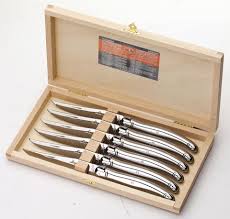
Walk into any home goods store or scroll through Amazon, and you’ll see rows of knives with that distinctive bee on the handle, the curved blade, and “Laguiole” stamped somewhere. Most have never been within a thousand miles of the French village they claim to come from. What started as a protected regional craft is now a catch-all label for any vaguely European-looking steak knife, and the market is flooded with cheap imitations trading on the name without the craftsmanship.
A steak knife isn’t just a utility—it’s part of the dining experience. A good one glides through a ribeye without tearing the fibers, feels balanced in your hand, and looks elegant on the table. A bad one shreds the meat, wobbles after a few months, and leaves you wondering why you didn’t just grab a cheap serrated blade from the supermarket. For anyone who cooks steak regularly—or wants to impress dinner guests without awkward sawing—the right set of Laguiole-style knives can elevate the meal. But finding the real ones that justify the hype takes some digging.
This guide is for people who want genuine French-made steak knives that deliver on form and function, and for those who want the Laguiole aesthetic without high maintenance. I’ve looked past the marketing and focused on what actually matters: origin (is it actually made in France?), blade quality (forged vs. stamped, steel type, edge geometry), handle materials (from buffalo horn to synthetic wood), and overall durability. The result is a curated shortlist that covers the full spectrum—from heirloom-quality pieces to practical everyday sets.
Full reviews:
- Jean Dubost Laguiole 6-Piece Steak Knife Set, Ivory Handles
- Laguiole en Aubrac Luxury Fully Forged Full Tang Stainless Steel Steak Knives 6-Piece Set with Buffalo Horn Handle
- Jean Dubost Laguiole 6-Piece Steak Knife Set, Paris Colors Handles
Also worth a look:
- Laguiole Style de Vie Luxury Line Steak Knives, 6 Pieces, Olive Wood
- Trudeau Laguiole Steak Knives Set of 6 – Pakkawood Handles
None of these are perfect—every option has trade-offs, and I’ll be honest about where they fall short. The Jean Dubost sets offer the most affordable path to authentic French craftsmanship, while the Laguiole en Aubrac is a genuine collector’s piece that demands a collector’s level of care. The Laguiole Style de Vie and Trudeau sets provide the look and feel without the French price tag, but come with their own compromises.
If you’ve ever stood in a kitchen store wondering whether the $30 set is “real” or if you need to spend $500 to avoid getting ripped off, this article is for you.
Jean Dubost Laguiole 6-Piece Steak Knife Set, Ivory Handles
Wandering through the Laguiole aisle on Amazon can be discouraging. Everything from $20 to $600 calls itself authentic, and the mid-range options are particularly murky. Then you find the Jean Dubost Ivory set. It’s made in France, comes with a certificate, and costs around $80. That alone earns it a closer look.
The set includes six knives with classic riveted handles in a creamy ivory ABS, each stamped with the Laguiole bee and a simple bolster. They arrive in a solid wooden tray that feels more substantial than the knives themselves—but that’s part of the trade-off. At this price point, something has to give, and with Jean Dubost it’s the blade.
Each knife uses a stamped stainless steel blade about 1.2mm thick. That’s noticeably thinner than most mid-range steak knives, and you can feel it when slicing through a thick ribeye. The blade flexes under pressure—not alarmingly, but enough that you notice. It won’t snap, but it doesn’t inspire the same confidence as a thicker, forged blade. For a home cook who cuts carefully, it’s manageable; for someone who saws aggressively or cuts through bone-in cuts, it’s a limitation.
The serrated edge is another mixed bag. It arrives sharp and stays that way for a long time—serrations don’t need frequent honing. But they also tear meat fibers rather than slicing cleanly, which means you lose a tiny amount of the steak’s texture with each cut. If you notice the difference between a clean cut and a ragged edge, this will bug you. If you just want to eat your steak without a struggle, it’s fine.
Then there’s the handle. The ivory ABS plastic looks good and feels comfortable, but it’s still plastic. The rivets holding it to the tang are small, and over time—especially if you run these knives through the dishwasher, despite the manufacturer’s warnings—they can loosen. Hand washing is safer, but even then, the construction feels a notch below a full-tang, solid-handle knife.
So why recommend it? Because you’re not paying for a perfect knife. You’re paying for a genuine French-made Laguiole steak knife set that looks elegant on the table, comes from a reputable cutler with over a century of history, and costs less than most mass-produced alternatives. The flaws are real, but they’re also the reason it’s $80 instead of $200. For the home cook who wants authenticity without the museum-piece price, this is the smartest buy in the category.
Laguiole en Aubrac Luxury Fully Forged Full Tang Stainless Steel Steak Knives 6-Piece Set with Buffalo Horn Handle
At nearly $600, the Laguiole en Aubrac set doesn’t just ask you to spend money—it asks you to make a statement. This is the most ambitious Laguiole steak knife you’ll find from a genuine French workshop, and everything about it screams “heirloom.” The question is whether that ambition serves your dinner table or just your ego.
Start with the materials. The blade is forged from 12c27 Sandvik steel, a Swedish stainless known for excellent edge retention and corrosion resistance—a serious step up from the stamped blades of the Jean Dubost sets. The knife is full tang, with polished stainless bolsters that add weight and balance. The handle is genuine buffalo horn, each piece unique in grain and color, selected by hand at the Laguiole en Aubrac workshop.
At nearly $600, the Laguiole en Aubrac set isn’t just an expense—it’s a declaration. It’s the most ambitious Laguiole steak knife from a genuine French workshop, and everything about it screams “heirloom.” But does that ambition serve your dinner table, or your ego?
That horn requires care. It’s sensitive to moisture, heat, and detergents—no dishwasher, immediate hand drying, and periodic oiling to prevent drying and cracking. This maintenance makes sense only if you enjoy the ritual of caring for fine tools. If you just want to cut steak without thinking, it’s a chore.
The blade is also shorter than many steak knives—only 4 inches. Fine for standard cuts, but if you regularly face thick tomahawks or prefer a longer slicing stroke, you’ll feel the constraint. The knife is designed for precision, not power.
This set is for the person who views cutlery as part of the dining experience, not just a utility—someone who wants a functional piece of art and values material provenance (French-forged steel, natural horn, handmade assembly) over convenience or cost. For that buyer, this set is the benchmark. For everyone else, the Jean Dubost Ivory set delivers 80% of the experience for 15% of the price.
Check Price → Jean Dubost Laguiole 6-Piece Steak Knife Set, Ivory Handles on Amazon
Jean Dubost Laguiole 6-Piece Steak Knife Set, Paris Colors Handles
The Jean Dubost Paris Colors set lands in an uncomfortable spot. It’s genuinely made in France yet feels like a souvenir. At around $57 for six knives, it’s the cheapest real Laguiole you can put on your table—and that low price comes with compromises.
The blade is the same stamped stainless as the Ivory set—1.2mm thin—and it flexes noticeably when cutting anything tougher than a medium-rare filet. The colorful ABS handles feel hollow and light, lacking the weight and warmth of wood or horn. They’re plastic, plain and simple, and that makes the knife feel cheaper than its price suggests. The serrated edge will cut steak, but it’s not something you’d ever want to try sharpening at home.
If your absolute priority is “Made in France” and your budget is fixed, this set works. But it’s hard to recommend over the superior-handling Ivory version for only about $25 more. The Paris Colors knives are French in name, but they feel like a compromise you notice every time you pick one up.
Check Price → Jean Dubost Laguiole 6-Piece Steak Knife Set, Paris Colors Handles on Amazon
Also Worth a Look
Laguiole Style de Vie Luxury Line Steak Knives, 6 Pieces, Olive Wood offers a beautiful plain-edge blade that slices cleanly without tearing, and the olive wood handles feel warm and natural in the hand. Buyers who prioritize the look and feel of a classic Laguiole over its origin will be happy here, but note that the set isn’t made in France and the partial-tang construction may loosen over time.
Trudeau Laguiole Steak Knives Set of 6 – Pakkawood Handles is the choice if you want the Laguiole aesthetic without the maintenance fuss—the Pakkawood handles are moisture-resistant and the blades are dishwasher-safe, which is rare in this category. Keep in mind the steel is a budget 30CR13 grade and the knives come from China, so you’re paying for convenience and looks, not craftsmanship.
At a Glance
| Product | Price | Key Spec | Rating | Best For | Where to Buy |
|---|---|---|---|---|---|
| Jean Dubost Laguiole 6-Piece Steak Knife Set, Ivory Handles | Around $83 | 1.2mm stamped blade, ABS handles, made in France | 4.7 | Authentic French quality at a fair price | Check Price → |
| Laguiole en Aubrac Luxury Fully Forged Full Tang Set with Buffalo Horn Handle | Around $580 | 12c27 Sandvik forged steel, buffalo horn handle, 4-inch blade | 4.7 | Heirloom collectors who value material provenance | Check Price → |
| Jean Dubost Laguiole 6-Piece Steak Knife Set, Paris Colors Handles | Around $57 | 1.2mm thin blade, colorful ABS handles, made in France | 4.4 | Budget buyers who insist on French origin | Check Price → |
| Laguiole Style de Vie Luxury Line Steak Knives, 6 Pieces, Olive Wood | Around $80 | Plain edge, olive wood handles, gift box | 4.7 | Style seekers who want a clean cut without tearing | Check Price → |
| Trudeau Laguiole Steak Knives Set of 6 – Pakkawood Handles | Around $80 | 30CR13 steel, serrated, Pakkawood, dishwasher safe | 4.6 | Practical users who want no-maintenance convenience | Check Price → |
How to Choose the Right Laguiole Steak Knives
After looking at five sets spanning nearly $550 in price, you might wonder whether the differences matter for cutting a steak. The honest answer: it depends on what you care about. Here’s what to weigh.
Genuine vs. imitation (and why it matters)
First, understand that “Laguiole” isn’t a brand—it’s a style from the village of Laguiole in southern France. Any manufacturer can stamp a bee on a handle and call it Laguiole. The real distinction is whether the knife is made in France by a traditional cutler or mass-produced overseas, using the design without the craftsmanship.
For some buyers, origin matters. They want the story—the knowledge that a skilled artisan shaped their knife. Others just want a good-looking steak knife that works. Neither is wrong, but knowing where you stand prevents overpaying for a label or dismissing real craftsmanship.
Blade: stamped vs. forged
The biggest technical difference is how the blade is made. Most affordable Laguiole steak knives, including the Jean Dubost sets, use stamped blades cut from a sheet of steel and ground to shape. They’re thinner, lighter, and cheaper. For cutting steak, a stamped blade works fine, but it flexes under pressure and won’t hold an edge as long as a forged blade.
Forged blades—like the Sandvik 12c27 in the Laguiole en Aubrac set—are heated and shaped individually. They’re thicker, stronger, and retain their edge through more meals. The trade-offs are cost and weight. If you cook steak several times a week and want a knife that feels substantial, forged is worth the premium. Occasional steak eater? A good stamped blade will serve you well.
Handle materials and maintenance
Handles determine how much care you’re signing up for. Natural materials like buffalo horn and olive wood look beautiful and feel warm in the hand, but they demand attention. That means no dishwasher. Dry immediately after washing. Horn needs periodic oiling to prevent cracking. Wood can warp if repeatedly exposed to moisture.
Synthetic handles—ABS plastic, Pakkawood (wood veneer laminated with resin), or acrylic—are less fussy. Many are dishwasher-safe (check the manufacturer), don’t need oiling, and won’t crack in dry conditions. The trade-off is that they feel less luxurious and may not age as gracefully.
Serrated vs. plain edge
This one is simple. Serrated blades cut aggressively and stay sharp a long time, but they tear meat fibers rather than slicing cleanly. They’re also hard to resharpen at home. Plain edges give a cleaner cut that preserves texture, but need more frequent honing and sharpening.
If you notice—and care about—the difference between a torn edge and a clean slice, go plain edge. If you just want to cut your steak without thinking, serrated is fine.
Price vs. longevity
A $57 set of Jean Dubost Paris Colors knives will cut steak for years—maybe decades with gentle care. A $580 Laguiole en Aubrac set will also last decades, but it demands more from you along the way. The question isn’t lifespan; it’s whether the extra cost translates to something you’ll actually appreciate.
For most people, the sweet spot is the Jean Dubost Ivory set at around $80. It’s authentically French, well-made enough for regular use, and won’t cause anxiety at the dinner table. If you want something that feels like an heirloom and you’re willing to maintain it, the Laguiole en Aubrac is unmatched. If you want the look without the fuss, the Trudeau or Laguiole Style de Vie sets deliver convenience at the expense of origin.
The takeaway
There’s no one-size-fits-all set. The home cook who values authentic French craftsmanship and wants a solid performer for everyday steak dinners will find the best fit in the Jean Dubost Ivory set. It’s not perfect—the thin blade flexes, and the plastic handle won’t win awards—but it delivers real provenance at a price that doesn’t hurt. For the buyer who wants the finest materials and is willing to care for them, the Laguiole en Aubrac set is a genuine investment piece. Everyone else? Pick the set that matches your maintenance tolerance and your budget, and you’ll eat well.
Q: How can I tell if Laguiole steak knives are genuinely made in France?
A: Look for a stamp that says ‘Made in France’ and, ideally, an authenticity certificate from the manufacturer. Reputable French cutlers like Jean Dubost and Laguiole en Aubrac clearly mark their origin, while many inexpensive sets branded as ‘Laguiole style’ are mass-produced in Asia. Check the packaging for specific wording—generic phrases like ‘French design’ often indicate foreign production.
Q: Are Laguiole steak knives with natural horn handles dishwasher-safe?
A: No. Natural materials like buffalo horn, olive wood, and rosewood are highly sensitive to moisture, heat, and detergents. The Laguiole en Aubrac set with buffalo horn, for example, must be hand washed and dried immediately, then periodically oiled to prevent cracking. If you want dishwasher-safe convenience, choose a set with synthetic handles like the Trudeau Pakkawood models.
Q: Do Laguiole steak knife sets typically include steak forks?
A: Most do not—the standard offering is a set of knives only, often with a wooden storage tray or box. Some sets like the French Home LG084 include matching forks, but they are less common. If you need a coordinated set of both knives and forks, check the product description carefully before buying.
Q: Will the riveted handles on Laguiole knives loosen over time?
A: It can happen, especially if the knives are exposed to frequent dishwashing or extreme temperature changes. The Jean Dubost sets use small rivets that may loosen with heavy use, though hand washing and gentle handling extend their lifespan. Higher-end full-tang models like the Laguiole en Aubrac have polished bolsters that are less prone to loosening.
Q: What type of steel is best for Laguiole steak knife blades?
A: Forged stainless steel like Sandvik 12c27 offers superior edge retention and corrosion resistance, as seen in the Laguiole en Aubrac set. Most affordable French-made sets use stamped stainless steel blades (1.2mm thick), which are functional but flex more and don’t hold an edge as long. Budget-friendly imports often use 30CR13 steel—serviceable but not premium.
Q: How long do Laguiole steak knives typically last, and do they come with a warranty?
A: With proper care, authentic Laguiole knives can last decades. High-end makers like Laguiole en Aubrac often include a lifetime warranty covering manufacturing defects, while budget sets may offer only a limited warranty or none at all. Always check the warranty policy before purchase, especially for investment-grade sets.
{"@context": "https://schema.org", "@type": "FAQPage", "mainEntity": [{"@type": "Question", "name": "How can I tell if Laguiole steak knives are genuinely made in France?", "acceptedAnswer": {"@type": "Answer", "text": "Look for a stamp reading 'Made in France' and, ideally, an authenticity certificate from the manufacturer. Reputable French cutlers like Jean Dubost and Laguiole en Aubrac clearly mark their origin, while many inexpensive sets branded as 'Laguiole style' are mass-produced in Asia. Check the packaging carefully—generic phrases like 'French design' often indicate foreign production."}}, {"@type": "Question", "name": "Are Laguiole steak knives with natural horn handles dishwasher-safe?", "acceptedAnswer": {"@type": "Answer", "text": "No. Natural materials like buffalo horn, olive wood, and rosewood are highly sensitive to moisture, heat, and detergents. The Laguiole en Aubrac set with buffalo horn, for example, must be hand washed and dried immediately, then oiled periodically to prevent cracking. If you want dishwasher-safe convenience, choose a set with synthetic handles like the Trudeau Pakkawood models."}}, {"@type": "Question", "name": "Do Laguiole steak knife sets typically include steak forks?", "acceptedAnswer": {"@type": "Answer", "text": "Most do not—the standard offering is a set of knives only, often with a wooden storage tray or box. Some sets like the French Home LG084 include matching forks, but they are less common. If you need a coordinated set of both knives and forks, check the product description carefully before buying."}}, {"@type": "Question", "name": "Will the riveted handles on Laguiole knives loosen over time?", "acceptedAnswer": {"@type": "Answer", "text": "It can happen, especially with frequent dishwashing or extreme temperature changes. The Jean Dubost sets use small rivets that may loosen with heavy use, though hand washing and gentle handling extend their lifespan. Higher-end full-tang models like the Laguiole en Aubrac have polished bolsters that are less prone to loosening."}}, {"@type": "Question", "name": "What type of steel is best for Laguiole steak knife blades?", "acceptedAnswer": {"@type": "Answer", "text": "Forged stainless steel like Sandvik 12c27 offers superior edge retention and corrosion resistance, as seen in the Laguiole en Aubrac set. Most affordable French-made sets use stamped stainless steel blades (1.2mm thick), which are functional but flex more and don't hold an edge as long. Budget-friendly imports often use 30CR13 steel—serviceable but not premium."}}, {"@type": "Question", "name": "How long do Laguiole steak knives typically last, and do they come with a warranty?", "acceptedAnswer": {"@type": "Answer", "text": "With proper care, authentic Laguiole knives can last decades. High-end makers like Laguiole en Aubrac often include a lifetime warranty covering manufacturing defects, while budget sets may offer only a limited warranty or none at all. Always check the warranty policy before purchase, especially for investment-grade sets."}}]}