The problem with most dough-rolling setups isn’t the dough itself.
It’s the surface.
Countertops are too cold, too warm, too slippery, or too porous. Granite sucks heat out of pastry. Laminate peels eventually. And cleaning dough residue off a counter you also use for chopping onions gets old fast.
A dedicated pastry board solves this. But not all of them work equally well, and a few are genuinely frustrating to use daily.
This guide covers five options that actually make a difference. Prices range from about $23 to $60, so there’s room for different budgets. The best pick, and the one most experienced bakers will appreciate, is the Montex PBW24001—but I’ll get to why in a moment.
Montex PBW24001 — The One That Finally Gets the Details Right
Price: ~$60 | Rating: 4.6
This is the board that made me stop looking at others.
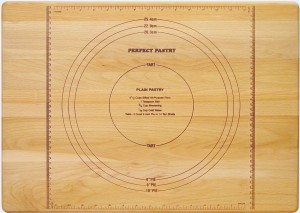
The Montex PBW24001 measures 23.5″ x 19.5″, which is genuinely useful for larger batches. But the real innovation—and it’s rare enough to call one—is the 2-in-1 surface design. One side has measurement markings printed directly into the wood. The other side is smooth, for when you don’t want distractions or need to flip something over without repositioning.
The measurement markings matter more than you’d think. Dough thickness guides on a board are usually decorative. These aren’t. They’re clear, they’re accurate, and they survive cleaning if you’re careful.
Then there’s the counter lip. This board sits flush against your counter edge and doesn’t slide. It’s a small mechanical detail, but it transforms the feel of rolling out stiff dough. No chasing the board across the surface.
The wood itself is solid. No warping after months of use, no rough grain appearing after washing. It’s finished well enough that flour dusts off easily—no sticking.
One caveat: this board needs hand-washing. Not negotiable. Dishwasher exposure will eventually crack the wood and fade the markings. Some people still try. They regret it.
Who this is for: anyone who bakes more than once a month and wants one board that simply works without fuss. The price is higher than the competition, but the construction justifies it.
Montex PB001 — Larger, Simpler, Still Excellent
Price: ~$59 | Rating: 4.5
If the PBW24001 feels too measured (literally), the Montex PB001 offers a similar foundation with less specificity.
At 24″ x 20″, it’s actually larger than its sibling. The surface area is generous. You can roll out a full pizza base or a large batch of cookie dough without repositioning halfway through.
Like the PBW24001, it has a reversible design. One side with measurement guides, one side smooth. The measurements here are slightly less refined—thicker lines, less precision—but still better than most boards offer.
The edge lip works the same way. Sits against the counter, doesn’t move. That alone makes it more usable than surface mats that slide around.
The wood quality is comparable. No splitting, no splintering. Smooth finish out of the box.
The compromise is subtle but real. The PB001 feels more like a general-purpose board that happens to have measuring marks. The PBW24001 feels like a baker’s tool designed around how dough actually behaves. If you’re an occasional baker, you won’t notice the difference. If you make laminated dough or wet doughs regularly, you’ll prefer the PBW24001.
Also worth noting: the PB001 has a slight tendency to feel heavy. It’s not unmanageable, but moving it around for storage requires two hands.
Who this is for: bakers who prioritize surface area over precision. Good for pizza, large batches, and anyone working with forgiving doughs.
Elihome Essential Baking Pastry Board — When You Want a Cutting Board That Also Rolls
Price: ~$55 | Rating: 4.6
This is the odd one out in terms of design philosophy.
The Elihome PB-PB141518 is technically a cutting board with baking-friendly features. It measures 15″ x 18″, which is noticeably smaller than the Montex options. That’s a meaningful limitation if you roll large batches.
But it has features the dedicated pastry boards don’t.
A juice groove runs around the perimeter. For carving, that’s useful. For pastry, it traps flour and prevents messes from spreading across the counter. Smart.
Non-slip feet keep it stable. The Montex boards achieve stability through the counter lip. The Elihome uses rubber feet. Both work, but the feet mean you can use this board anywhere on the counter, not just along the edge.
The material is wood fiber composite rather than solid hardwood. That’s not a downgrade necessarily. It’s non-porous, which resists staining and odor absorption better than natural wood. It also withstands temperatures up to 350°F, so it doubles as a trivet or serving board.
Dishwasher safe, too. That alone might sell it to some people.
The trade-off is surface feel. Wood fiber boards don’t have the same slight give as solid hardwood. When rolling wet dough, there’s less friction absorption. Some bakers prefer this. Others find it slippery.
And the small size is genuinely limiting. A 15″ x 18″ board works for pie crusts and small batches. For a full sheet of puff pastry or multiple pizza bases, you’ll be working in segments.
Who this is for: home bakers who need a multi-purpose board and value dishwasher convenience over pure rolling surface feel.
Totally Bamboo Kona Groove — The Reversible That Does Two Jobs Well
Price: ~$35 | Rating: 4.5
This board is harder to evaluate because it’s not trying to be a pastry-first surface.
The Totally Bamboo Kona Groove is a reversible baking and carving board. One side is flat with etched measurement markings for rolling dough. The other has a deep juice groove for carving meat.
The baking side works reasonably well. The bamboo surface is smooth and releases dough without excessive flouring. The measurements are engraved, so they won’t wear off like printed marks.
But bamboo has a different character than hardwood or composite. It’s harder. Rolling wetter doughs can feel like working on glass. Some people love this. Others find it too slick.
The juice groove side is nice to have if you also carve roasts or slice bread. But it means you’re carrying a board that’s optimized for two different tasks, and the compromise shows in both directions.
Size is decent at roughly 18″ x 13″. Not enormous, but adequate for most home baking.
The bamboo absorbs moisture more slowly than hardwood, which is good for durability. But it also doesn’t season the same way. You won’t develop that naturally non-stick patina over time.
At $35, it’s a solid value if you need a dual-purpose board. As a dedicated pastry surface, it’s fine but not exceptional.
Who this is for: bakers who also cook a lot of meat and want one board that could theoretically cover both. Just don’t expect perfection in either role.
Bethany Housewares Pastry Board & Cloth Set — The Old-School Solution That Still Works
Price: ~$23 | Rating: 4.8
This is the cheapest option, and it’s also the most unusual.
The Bethany Housewares set is a 19″ hardboard circle with a preshrunk cotton cover. You stretch the cover over the board, dust with flour, and roll on fabric.
Purists swear by this method. The fabric absorbs moisture slightly, preventing dough from sticking without requiring excess flour. For rolled cookies and pie crusts, it genuinely works.
The board itself is simple hardboard—nothing fancy. No measurements, no edge lip. Just a smooth, flat circle.
The cloth cover is replaceable, which is important because it gets dirty quickly. Flour, butter, dough residue. You can wash the cover, but over time, it stains. Stocking a few extras isn’t a bad idea.
The round shape is fine for most applications but annoying for rectangular doughs like puff pastry. You waste space in the corners (or corners that don’t exist).
Setup takes practice. If the cloth isn’t stretched tightly, wrinkles transfer to the dough. And the cloth can shift during rolling if you’re aggressive.
That said, at $23, it’s the cheapest way to get a dedicated pastry surface. If you’re skeptical about spending $60 on a board, this proves the concept without commitment.
Who this is for: traditionalists, budget-conscious bakers, and anyone who prefers working on fabric over wood or silicone.
Comparison Table
| Product | Price | Key Strength | Main Drawback | Best Fit | Rating | Link |
|---|---|---|---|---|---|---|
| Montex PBW24001 | ~$60 | Measurement precision + counter lip | Must hand-wash | Serious home bakers | 4.6 | Link |
| Montex PB001 | ~$59 | Extra large surface | Less precision, heavier | Batch bakers, pizza makers | 4.5 | Link |
| Elihome Essential | ~$55 | Dishwasher safe, juice groove | Small size, slippery feel | Multi-purpose kitchen users | 4.6 | Link |
| Totally Bamboo Kona | ~$35 | Dual-purpose, affordable | Not optimized for pastry | Budget-conscious, dual users | 4.5 | Link |
| Bethany Housewares | ~$23 | Unique cloth surface | Setup hassle, round shape | Traditionalists, low budget | 4.8 | Link |
Buyer’s Guide: What Actually Matters in a Pastry Board
Size Isn’t Everything, But It Matters
Small boards work for small batches. If you regularly make dough that requires a 12″ rolling length, you can get away with a 15″ x 18″ board.
But here’s the thing nobody mentions: you don’t just need space for the dough. You need space to move the rolling pin. That means extra clearance around the edges. A board that’s exactly as wide as your dough forces you to stop and reposition constantly.
The Montex PB001 (24″ x 20″) is about as large as practical for average countertops. The Elihome (15″ x 18″) is fine for cookies and small pies but noticeably tight for pizza or laminated dough.
Rule of thumb: go bigger than you think you need. The extra few inches matter more than the material.
Surface Material: Wood vs. Bamboo vs. Composite
These aren’t interchangeable.
Solid hardwood (like the Montex boards) develops a natural seasoning over time. Flour and oils work into the grain, creating a surface that releases dough with minimal dusting. This takes months, but it’s real.
Bamboo (the Totally Bamboo board) is harder and less porous. It won’t season the same way. It’s easier to clean and more resistant to staining, but wet doughs slide more.
Wood fiber composite (the Elihome) splits the difference. Non-porous, so no seasoning. But also less sticky than bamboo. The trade-off is a slightly unnatural feel—like rolling on a countertop replacement rather than a natural surface.
If you bake weekly, hardwood is worth the maintenance. If you bake occasionally and prioritize easy cleaning, composite is fine.
The Lid Problem (or Edge Problem)
Counter lip vs. non-slip feet vs. nothing.
The Montex boards use a lip that hooks over the counter edge. This is mechanically superior. It doesn’t wear out or lose grip. It just works.
Non-slip feet (Elihome) work well on smooth surfaces but can slide on textured counters or if wet. Over months, the feet can collect grime or peel.
The round Bethany board has neither. It sits on the counter and moves unless you hold it. The cloth cover adds some friction, but it’s not stable for aggressive rolling.
Consider your countertop and your rolling style. If you roll hard and fast, the lip design is safer.
Should You Buy a Cloth-Covered Board?
The Bethany Housewares method works, but it’s not for everyone.
The cloth absorbs moisture, which helps with sticky doughs. But it also absorbs odors, stains, and eventually wears out. You’ll need replacement covers.
And the round shape is genuinely limiting. Rectangular doughs waste surface area. If you make a lot of rectangular pastries (puff pastry, rough puff, croissants), a round board is frustrating.
The cloth method is best for rolled cookies and pie crusts. For everything else, a flat wood board is more versatile.
FAQ
What is the best wood pastry board for most home bakers?
The Montex PBW24001. It has the right size, the measurement markings are actually useful, and the counter lip makes it stable. It’s not cheap, but it’s a well-designed tool rather than a generic cutting board with flour dust on it.
How important are measurement markings on a pastry board?
Less important than most people think. Experienced bakers use visual cues and practice. Beginners find them helpful for consistency. The key is that the markings need to be accurate and durable. Printed marks fade. Engraved marks last. The Montex boards use a quality print that survives careful hand-washing, but avoidance is still better than reliance.
Can I use a regular cutting board for dough?
You can. But the performance difference is noticeable. Cutting boards often have juice grooves, textured surfaces, or porous grain that catches dough. A dedicated pastry board has a smooth, sealed surface designed to release dough without excessive flouring. It’s a small upgrade that changes how your dough behaves.
How do I maintain a wood pastry board?
Hand-wash with mild soap and warm water. Dry immediately. Do not submerge. Occasionally treat with food-grade mineral oil or beeswax to maintain the surface. Avoid dishwasher use. Wood that dries unevenly warps. Proper care extends the board’s life by years.
Is bamboo better than hardwood for pastry?
Hardwood seasons better. Bamboo is harder and less porous, which means it won’t develop a non-stick patina. For very wet doughs, bamboo can feel slick and unnatural. For dry doughs, the difference is minimal. Choose wood for dedicated pastry use. Choose bamboo if you want a board that resists moisture and staining more generally.
Final Thought
The best pastry board is the one you actually use. A $60 board that sits in a cabinet is worse than a $23 board that gets used weekly.
That said, the Montex PBW24001 is the one that stays on the counter. It’s not flashy. It’s not cheap. But the details—the lip, the markings, the surface feel—make it a genuinely useful kitchen tool rather than a compromise.
If you’re still unsure, start with the Bethany Housewares set. It’s cheap, it teaches you whether you prefer working on cloth or wood, and it won’t feel like a wasted investment if you upgrade later.
Most people discover that a good board changes more than they expected. It’s not just about rolling. It’s about not fighting your tools. And that’s worth whatever you end up spending.