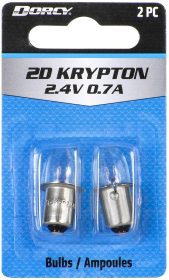
You know the moment. You twist on your old Maglite and the light barely reaches your keys. Or worse—the bulb flickers and dies. Now you’re unscrewing the head, trying to remember when you last saw a replacement bulb.
Most people don’t think about flashlight bulbs until they need one. When that moment comes, you’re facing a bewildering aisle of options: incandescent or LED? Xenon, krypton, or halogen? E10, PR2, P13.5S, or bi-pin? And will any of them fit the flashlight in your junk drawer?
It’s a mess of standards, voltages, and base types. But it’s also a chance to get better light than before.
If you’re reading this, you likely own a flashlight worth keeping—a Maglite, an old Dorcy, or a vintage torch. You don’t want a whole new light. You just want a replacement bulb that gets you back in business, ideally with better performance. That’s what this guide is for.
The category has shifted hard toward LED in the last decade. A quality LED replacement bulb can deliver five to ten times the brightness of its incandescent counterpart, last tens of thousands of hours, and run longer on the same batteries. But not every LED upgrade is a direct drop-in. Some require specific polarity. Others won’t fit certain base styles. And sometimes, a classic incandescent is exactly what you need—for a restoration, a glovebox backup, or simply because you prefer that warm glow.
There’s no single “best” bulb because your flashlight is different from your neighbor’s. Instead, this guide breaks down the options by what you own and what you want.
We’ll cover full reviews of three standout options:
- GLGYCB LED Conversion Kit for Maglite (4-Pack) — the best value for upgrading multiple Maglite C/D cell lights to LED in one shot
- MagLite 107-000-619 Replacement Lamps (2-Pack for 2-Cell AA) — a no-surprises OEM incandescent for Mini Maglite owners who want a stock replacement
- YAFIYGI 3-Pack LED Flashlight Bulb (6-24V) — a wide-voltage budget pack for work lights, power tools, and multi-cell flashlights
And we’ll look briefly at five more worth knowing about:
- EBLCL Compatible Mag Lite LED Conversion Bulb (300LM) — a focused single-bulb upgrade for 2D/2C Maglites that throws farther than floody kits
- TRLIFE LED Bulb for 3-16 Cell C/D Maglite — the go-to for big multi-cell Maglites that need area-filling, floody light
- MagLite LM2A001 Xenon Lamp for Mini AA/AAA — the official OEM xenon bump for Mini Maglite purists
- Ruiandsion E10 LED Bulb (Non-Polarity, 4-Pack) — a lifesaver for vintage flashlights with unknown wiring and E10 bases
- Dorcy 411663 Krypton Bulb (6V/4D, 2-Pack) — a solid incandescent backup for 4D/6V lanterns
No made-up test results. Just what fits, what’s bright enough, and what you might regret ignoring. Let’s start with the conversion kit that makes the most sense for anyone with more than one Maglite.
GLGYCB LED Conversion Kit for Maglite (4-Pack)
If you own more than one Maglite—say, a 2D in the garage and a 3D in the trunk—the math on this kit gets interesting fast. At about $4 per bulb ($15.60 for four), it’s a fraction of the cost of single LED replacements that often run $9 to $12 each. This pack isn’t just an upgrade; it’s a way to modernize all your lights at once, with spares to share or stash.
Installation couldn’t be simpler: unscrew the head, pull the old incandescent, screw in the new bulb. It fits the standard P13.5S/PR2 base found on Maglite C and D cell models from 2-cell to 4-cell versions. No wiring, no soldering, no adapter rings. The kit covers 3V to 6V, so voltage mismatch isn’t an issue as long as your flashlight is within that range.
You get a clean white light, considerably brighter than the stock incandescent—roughly 200 lumens per bulb. The difference is dramatic. The beam is wide and even, good for lighting a room or a campsite, with a neutral cool white tint—no blue or yellow.
But here’s the trade-off: this bulb is floody. No defined hotspot, no focused beam to reach across a yard. If you need to spot a deer at 100 yards, this isn’t your bulb. The light spreads evenly, great for area illumination but poor for distance. If your Maglite is a close-to-midrange tool—inspecting under the hood, setting up a tent, walking the dog—you’ll be happy. If you rely on a focused beam for security or search, you’ll be disappointed.
Polarity matters. These bulbs are positive-tip, negative-ring. Most Maglites from the last couple of decades are wired that way, but some older models or third-party lights may have reverse polarity. Before screwing it in, check the contact points. If the bulb doesn’t light, don’t force it—reverse the battery orientation or verify with a multimeter. It’s a minor step, but easy to overlook.
Reliability is a mixed bag. The majority of users report a solid, flicker-free experience. A small percentage mention intermittent flicker or early failure within a few months. That’s not unusual for budget LED conversions—the driver circuits aren’t always high quality. Still, with four bulbs in the pack, a dud is less painful than with a single bulb.
Who’ll appreciate this kit? Someone with two or three Maglites who wants to modernize them all without dropping $30 on individual upgrades. Or the camper who just needs dependable area light. Or the household with a flashlight in every drawer. It’s not the brightest or the most focused, but it’s the smartest buy for the money.
Check Price → GLGYCB LED Conversion Kit for Maglite (4-Pack) on Amazon
MagLite 107-000-619 Replacement Lamps (2-Pack for 2-Cell AA)
Sometimes you don’t want an upgrade. You just want the flashlight to work again. The 107-000-619 is a straight OEM replacement for the 2-cell AA Mini Maglite, pumping out 9 to 12 lumens of classic incandescent light. Dim by any modern standard—a cheap LED drop-in will give you ten times that—but it fits perfectly, every time.
Two-pack costs around $8, so you get a spare. Installation is twist-and-replace. Predictably, the filament is fragile (drop your flashlight and you’ll need another), and lifespan is short—maybe 20 to 30 hours of actual use. Still, if you need an exact stock replacement for your Mini Maglite and you’re fine with dim light that feels like 1988, this works. It’s a backup for the backup, not a daily driver.
Check Price → MagLite 107-000-619 Replacement Lamps (2-Pack for 2-Cell AA) on Amazon
YAFIYGI 3-Pack LED Flashlight Bulb (6-24V)
The YAFIYGI 3-pack is built for versatility. With a voltage range spanning 6 to 24 volts, it fits not just flashlights but power tools, work lights, and lanterns from Ryobi and Milwaukee. The P13.5S/PR2 base is standard in larger lights, making it a one-size-fits-all for many multi-cell setups.
At about $10 for three, you’re paying roughly $3.30 each—budget pricing for a floody 6000K LED upgrade. The beam is wide with no spot, designed for area lighting rather than throw. The claimed 247 lumens are likely at 12V; at 6V, expect around 100 lumens—still a big step up from incandescent but not the monster output advertised. Some users report flickering, especially at lower voltages, and the bulbs aren’t individually potted, making them more fragile if dropped.
It’s an excellent value for outfitting a collection of older lights or tools you use indoors, but don’t count on it for a tight, focused beam or consistent performance across the voltage range.
Check Price → YAFIYGI 3-Pack LED Flashlight Bulb (6-24V) on Amazon
Also Worth a Look
EBLCL Compatible Maglite LED Conversion Bulb (300LM) – For a single 2D or 2C Maglite, this one throws noticeably farther than floody conversion kits. Ideal if you only need to upgrade one light and want maximum reach, but it won’t fit larger models and the plastic housing can cause dimming during extended use.
TRLIFE LED Bulb for 3-16 Cell C/D Maglite – Handles big lights from 3D up to 16D, casting a 110-degree flood beam perfect for area lighting without rewiring. Just note: there’s no spot focus, so throw is short, and thermal throttling can kick in after about 15 minutes.
Maglite LM2A001 Xenon Lamp for Mini AA/AAA – Purists who want an official OEM incandescent boost for their Mini Maglite will like this. It offers warm light at 30-40 lumens, but the filament is fragile compared to any LED option.
Ruiandsion E10 LED Bulb (Non‑Polarity, 4-Pack) – If you’re resurrecting a vintage flashlight with unknown wiring, this works with positive or negative ground. Great for E10 screw bases, but expect a floody beam with no throw, and output drops noticeably as batteries drain.
Dorcy 411663 Krypton Bulb (6V/4D, 2-Pack) – A budget incandescent backup for 4D or 6V lanterns. Its warm light cuts through fog better than cool LEDs, but at 20-30 lumens it’s dim by modern standards, and bulb life is short—around 15-20 hours.
At a Glance
| Product | Price | Key Spec | Rating | Best For | Where to Buy |
|---|---|---|---|---|---|
| GLGYCB LED Conversion Kit for Maglite (4-Pack) | ~$16 | 200lm, 3-6V, P13.5S/PR2 base, 4-pack | 4.5 | Upgrading multiple Maglites on a budget | Check Price → |
| MagLite 107-000-619 Replacement Lamps (2‑Pack for 2‑Cell AA) | ~$8 | 9-12 lumens, incandescent, for 2-cell AA Mini Maglite | 4.6 | Exact OEM stock replacement | Check Price → |
| YAFIYGI 3‑Pack LED Flashlight Bulb (6‑24V) | ~$10 | 100-247lm, 6-24V, P13.5S/PR2, 3-pack | 4.4 | Work lights and multi-cell flashlights | Check Price → |
| EBLCL Compatible Mag Lite LED Conversion Bulb (300LM) | ~$11 | 300lm, CREE, for 2D/2C Maglite | 4.5 | Focused throw on a single 2-cell Maglite | Check Price → |
| TRLIFE LED Bulb for 3-16 Cell C/D Maglite | ~$9 | 200+lm, 4-24V, 110° flood, for 3-16 cell | 4.4 | Area lighting with large Maglites | Check Price → |
| MagLite LM2A001 Xenon Lamp for Mini AA/AAA | ~$9 | 30-40lm, xenon, for Mini Maglite AA/AAA | 4.6 | Purists wanting an OEM incandescent boost | Check Price → |
| Ruiandsion E10 LED Bulb (Non‑Polarity, 4-Pack) | ~$9 | 100lm, non‑polarity, E10 base, 4-pack | 4.5 | Vintage flashlights with unknown wiring | Check Price → |
| Dorcy 411663 Krypton Bulb (6V/4D, 2‑Pack) | ~$7 | 4.8V/0.75A, krypton, bayonet base, 2-pack | 4.5 | 4D/6V incandescent backup with warm light | Check Price → |
What to Weigh Before You Buy
When choosing a flashlight bulb, three things matter more than anything else: fit, use-case, and budget. Get the first wrong and nothing else matters. The second determines whether you’ll be happy. The third determines whether you overpay.
Fit starts with the base. The base is the most common point of failure. P13.5S and PR2 are the same thing—a bayonet-style base used in most Maglite C and D cell flashlights, plus many work lights and lanterns. E10 is a smaller screw base found in old flashlights, soldering guns, and instrument panels. Bi-pin bulbs are entirely different and won’t fit either. Your first step is to unscrew the head and look at what’s in there. Match the base, and you’re most of the way there.
Voltage is the other half of fit. A 2-cell flashlight runs at roughly 3 volts, a 3-cell at 4.5 volts, and a 4-cell at around 6 volts. LED bulbs often advertise a wide voltage range—3V to 6V for the GLGYCB pack, 4V to 24V for the TRLIFE—but not all deliver consistent brightness across that range. The YAFIYGI pack, for instance, claims 247 lumens at 12V but drops to about 100 lumens at 6V. So if your flashlight runs on three or more D cells, double-check the bulb’s voltage range before buying.
Polarity is an easy mistake to make. Many LED replacement bulbs are designed for positive-tip, negative-ring wiring. Most modern Maglites follow this standard, but older models or third-party lights may be reversed. If the bulb doesn’t light, try flipping the batteries end-for-end. If it still won’t work, you may need a bulb that’s explicitly non-polarity—like the Ruiandsion E10—or check polarity with a multimeter.
Whether you go LED or incandescent depends on how you’ll use the light. For a bright, focused beam outdoors—spotting animals or checking a dark yard—a bulb with a defined hotspot matters more than total lumens. The EBLCL single-bulb upgrade throws farther than floody multi-packs. If you’re lighting up a campsite, a room, or a workbench, floodier bulbs like the TRLIFE or YAFIYGI spread light more evenly. If you’re restoring a vintage flashlight or just want light that works, an incandescent is fine—but expect to replace it sooner.
Your budget depends on how many lights you need to convert. A single LED upgrade bulb costs about $9 to $12. A four-pack runs around $16. So if you have two or three Maglites, the multi-pack is the smarter buy. If you only need one bulb, buy a single. The YAFIYGI three-pack is cheap per unit but works best at higher voltages—that makes it a good deal only if your lights actually run at 12V or higher.
A common oversight: LED bulbs generate heat at the base, not the bulb. If your flashlight’s head doesn’t have a metal heat sink—many Maglites don’t—prolonged use can cause the bulb to dim or fail early. If you need a light that runs continuously for an hour, look for bulbs with better thermal management, or at least plan to turn it off every 15 minutes to let it cool.
So Which One Should You Buy?
If you own two or more Maglites in the 2-4 cell range and you’re ready to move on from dim, yellow incandescent light, the GLGYCB 4-pack is the smartest pick. It’s not the brightest or the most focused, but at about $4 per bulb it’s the best value for upgrading multiple lights at once.
For a 2D or 2C Maglite where throw matters most, the EBLCL conversion bulb delivers a tighter beam and higher rated output than any multi-pack alternative.
If you’re keeping your Mini Maglite stock and just need a working lamp, the MagLite 107-000-619 2-pack is the cheapest way to get it done. It’s dim, it’s fragile, but it’s guaranteed to fit.
For a collection of work lights, lanterns, or multi-cell flashlights that run on higher voltages, the YAFIYGI 3-pack is worth a look—just don’t expect full brightness below 12V.
The right bulb depends entirely on the flashlight sitting on your shelf. Figure out the base, match the voltage, and decide whether you want a spotlight or a floodlight. Everything else is details.
Q: Will a LED replacement bulb work with rechargeable batteries, or do I need alkalines?
A: Most LED replacement bulbs designed for a specific voltage range (e.g., 3V–6V) will work fine with rechargeable NiMH batteries, which typically deliver a slightly lower voltage than alkalines. However, some bulbs may appear dimmer because rechargeables maintain a lower nominal voltage under load. If you plan to use rechargeables, choose a bulb with a wide input voltage tolerance (like the YAFIYGI or TRLIFE) to avoid brightness drop.
Q: My flashlight has a plastic reflector. Will an LED bulb melt it?
A: Incandescent bulbs radiate heat forward, which can damage plastic reflectors over time. LED bulbs, by contrast, produce most of their heat at the base (the driver circuit). As long as your flashlight head has adequate ventilation or a metal heat sink, the reflector should be safe. If in doubt, keep run times under 15–20 minutes and let the light cool before extended use.
Q: How do I know if my bulb base is P13.5S, PR2, or something else?
A: Unscrew the flashlight head and look at the base of the existing bulb. A P13.5S (also called PR2) has two small metal nubs protruding from the sides of a cylindrical metal base – it looks like a small push‑fit bayonet. An E10 base is a threaded screw base about 10mm in diameter. Bi‑pin bulbs have two thin wire pins. If you’re unsure, measure the base diameter and compare with online images; most replacements list the base type clearly.
Q: Why does my new LED bulb flicker, especially when the batteries are low?
A: Flickering often indicates voltage instability or a poor electrical contact. If the bulb does not have built‑in voltage regulation, its brightness drops unevenly as batteries deplete. Try cleaning the contact points inside the flashlight head and ensure the bulb is screwed in firmly. If flickering persists with fresh batteries, the bulb’s driver circuit may be defective – consider a replacement.
Q: Can I put a high‑lumen LED bulb in an old 2‑D cell flashlight, or will it drain the batteries too fast?
A: Yes, a high‑lumen LED bulb will draw more current than the original incandescent, but because LEDs are more efficient, you’ll still get longer or comparable run time for the same brightness level. However, some big LED modules (300+ lumens) may trip the internal current limit of cheap flashlights or cause excessive heat. Stick with bulbs rated for your flashlight’s cell count (e.g., 2D = 3V) and avoid over‑volting.
Q: I want a focused spotlight beam for outdoor use. Which bulb type should I choose?
A: For throw distance, you need a bulb that puts out a concentrated hotspot. This is determined more by the bulb’s emitter design and the reflector than by lumens alone. The EBLCL Maglite conversion bulb (rated 300 lm) uses a narrow‑angle LED that produces a tighter beam than floody multi‑chip modules like the GLGYCB or TRLIFE. Avoid bulbs advertised as ‘wide angle’ or ‘110° flood’ – those are best for area lighting.
{"@context": "https://schema.org", "@type": "FAQPage", "mainEntity": [{"@type": "Question", "name": "Will a LED replacement bulb work with rechargeable batteries, or do I need alkalines?", "acceptedAnswer": {"@type": "Answer", "text": "Most LED replacement bulbs designed for a specific voltage range (e.g., 3V–6V) work fine with rechargeable NiMH batteries, though they deliver a slightly lower voltage than alkalines. Some bulbs may appear dimmer because rechargeables maintain a lower nominal voltage under load. If you plan to use rechargeables, choose a bulb with a wide input voltage tolerance (like the YAFIYGI or TRLIFE) to avoid brightness drop."}}, {"@type": "Question", "name": "My flashlight has a plastic reflector. Will an LED bulb melt it?", "acceptedAnswer": {"@type": "Answer", "text": "Incandescent bulbs radiate heat forward, which can damage plastic reflectors over time. LED bulbs, by contrast, produce most of their heat at the base (the driver circuit). As long as your flashlight head has adequate ventilation or a metal heat sink, the reflector should be safe. If in doubt, keep run times under 15–20 minutes and let the light cool before extended use."}}, {"@type": "Question", "name": "How do I know if my bulb base is P13.5S, PR2, or something else?", "acceptedAnswer": {"@type": "Answer", "text": "Unscrew the flashlight head and look at the base of the existing bulb. A P13.5S (also called PR2) has two small metal nubs protruding from the sides of a cylindrical metal base – it looks like a small push‑fit bayonet. An E10 base is a threaded screw base about 10mm in diameter. Bi‑pin bulbs have two thin wire pins. If you're unsure, measure the base diameter and compare with online images; most replacements list the base type clearly."}}, {"@type": "Question", "name": "Why does my new LED bulb flicker, especially when the batteries are low?", "acceptedAnswer": {"@type": "Answer", "text": "Flickering often means voltage instability or poor electrical contact. If the bulb lacks built‑in voltage regulation, its brightness drops unevenly as batteries deplete. Clean the contact points inside the flashlight head and make sure the bulb is screwed in firmly. If flickering persists with fresh batteries, the driver circuit may be defective — consider a replacement."}}, {"@type": "Question", "name": "Can I put a high‑lumen LED bulb in an old 2‑D cell flashlight, or will it drain the batteries too fast?", "acceptedAnswer": {"@type": "Answer", "text": "Yes, a high‑lumen LED bulb draws more current than the original incandescent, but because LEDs are more efficient, you'll still get longer or comparable run time at the same brightness. However, some big LED modules (300+ lumens) may trip the internal current limit of cheap flashlights or generate excessive heat. Stick with bulbs rated for your flashlight's cell count (e.g., 2D = 3V) and avoid over‑volting."}}, {"@type": "Question", "name": "I want a focused spotlight beam for outdoor use. Which bulb type should I choose?", "acceptedAnswer": {"@type": "Answer", "text": "For throw distance, you need a bulb that puts out a concentrated hotspot. This is determined more by the bulb's emitter design and the reflector than by lumens alone. The EBLCL Maglite conversion bulb (rated 300 lm) uses a narrow‑angle LED that produces a tighter beam than floody multi‑chip modules like the GLGYCB or TRLIFE. Avoid bulbs advertised as 'wide angle' or '110° flood' – those are best for area lighting."}}]}