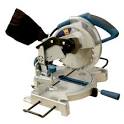
Crown molding is one of those jobs that separates hobbyists from pros—not because it’s physically hard, but because the angles are a nightmare. Compound miter saws exist to solve exactly that problem. But choosing the wrong saw means fighting with bevel adjustments, struggling to hold long pieces, or ending up with gaps in corners that caulk can’t hide.
The best overall compound miter saw for crown molding in 2026 is the DeWalt DWS780. It combines a sliding compound action, dual bevel (so you don’t flip the workpiece), and the XPS shadow cut line system that eliminates laser alignment guesswork. But it’s also $500. Not everyone needs that.
This guide covers five saws ranging from $149 to $739, each suited for different shop sizes and budgets. Also included are a couple of accessories that make crown molding cuts almost foolproof.
Quick Comparison
| Product | Price | Key Strength | Main Drawback | Best Fit | Rating |
|---|---|---|---|---|---|
| DeWalt DWS780 | ~$499 | XPS shadow light, dual bevel, sliding 12″ | Heavy (56 lbs), pricey | Pro trim carpenters, frequent crown work | 4.8 |
| DeWalt DWS779 | ~$399 | Same motor and build as DWS780 minus XPS | No cut line indicator, dust bag is mediocre | Serious DIYers who want sliding 12″ | 4.8 |
| DeWalt DWS715 | ~$299 | 12″ blade, single bevel, compact | No sliding, manual bevel only | Budget-conscious crown cutters, large baseboards | 4.8 |
| Makita LS1019L | ~$739 | 10″ but nested crown capacity of 12″, laser guide, linear bearings | Very expensive, laser battery can die | High-end trim work, small footprint | 4.6 |
| Metabo HPT C10FCG2 | ~$149 | Lightweight (24 lbs), shadow line, good accuracy | Single bevel, no slide, limited capacity | DIY crown beginner, small workshop | 4.6 |
Links in each product section below.
DeWalt DWS780 – The Pro’s Choice for Crown Molding
If crown molding is a regular part of your work, the DWS780 is the saw to beat. It’s a 12-inch sliding double bevel compound miter saw with the XPS shadow line system. That means you set the bevel once (left or right) and tilt the saw head without flipping the molding. No marking, no test cuts, no wasted material.
The XPS system projects a perfectly aligned shadow onto the cut line. It never needs calibration (unlike laser guides that drift). On crown molding, where a 1/16″ error ruins a corner, that’s huge.
The sliding mechanism uses a cam-lock that keeps the head firm during cuts. The tall sliding fence supports nested crown up to 7-1/2″ – big enough for most residential crown. The motor is a 15-amp, 3800 RPM unit that handles hardwoods and thick profiles without bogging.
What’s annoying: It weighs 56 pounds. Hauling it to a jobsite every day gets old. The dust collection bag is a joke (it catches maybe 40%, even though DeWalt claims 75%). The material clamp included is a basic twist-knob type that gets in the way.
Who should buy it: If you do crown molding more than a few times a year, this saw pays for itself in saved time and reduced waste. It’s also great for other trim work – baseboards, casings, picture frames.
Who should skip: Weekend warriors who do one crown job per year. The DWS779 (next) is almost the same saw for $100 less.
→ Check price of DeWalt DWS780 on Amazon
DeWalt DWS779 – The Same Saw, Minus the Shadow Light
The DWS779 is essentially the DWS780’s twin without the XPS light. Same 15-amp motor, same sliding dual bevel mechanism, same tall fence (7-1/2″ nested crown capacity). The only real difference is the cut line indicator – the DWS779 uses a basic laser guide that’s fine but needs occasional adjustment.
For crown molding, that matters. A shadow light is more accurate and doesn’t drift. But for many users, the laser works well enough. You can also buy aftermarket LED shadow lights or use a pencil mark with the laser as a rough guide.
The dust collection on this model is slightly better than the DWS780 because the laser housing takes up less space in the blade guard, but it’s still not great. Plan to hook it to a shop vac.
The price difference ($399 vs $499) is meaningful if you’re on a tighter budget. The mechanical build quality is identical. The bevel stops are positive and repeatable. The sliding motion is smooth.
One frustration: The laser requires two AA batteries that seem to die at the worst moments. Keep spares in the grip.
Who should buy: Anyone who wants a professional-grade sliding compound miter saw but doesn’t want to pay for the XPS light. If you already own a laser level or don’t mind manual marking, this is the better value.
→ Check price of DeWalt DWS779 on Amazon
DeWalt DWS715 – Big Blade, No Slide, Lower Cost
The DWS715 is a 12-inch single bevel compound miter saw (non-sliding). It’s basically the non-sliding version of the DWS779/780 family. The 12-inch blade gives you deeper vertical capacity – up to 5-1/2″ base vertically – which is useful for tall baseboards or crown that sits on top of thick casing.
For crown molding, a non-sliding saw works fine for pieces up to about 4 inches nested. But if you’re cutting wide crown (say, 5-1/4″ or larger), you’ll need to flip the molding or use a coping saw instead of mitering, because the blade can’t slide back to clear the full width.
The single bevel means you have to manually tilt the head (it stops at 45° left only). If you’re doing inside corners where one cut requires the bevel on the right, you’ll have to flip the workpiece or use the miter detent plate creatively. Not ideal for production crown work, but doable for a few rooms.
The build quality is solid – same stainless steel detent plate with 14 positive stops, machined aluminum base, tall sliding fence supports 4-1/4″ vertically. The motor is the same 15-amp, 3800 RPM as its sliding siblings.
Why this is still a good choice: It’s $299 for a 12-inch saw that’s very accurate. If you’re on a budget and cutting mostly smaller crown (under 4 inches), you won’t miss the slide. Also, it’s lighter than the sliding versions (around 45 lbs) and takes less bench space.
The real trade-off: No sliding mechanism means you can’t cut wide boards flat. That limits you to molding work, not dimensional lumber. But for crown molding specifically – if you’re working in small pieces – it’s absolutely capable.
→ Check price of DeWalt DWS715 on Amazon
Makita LS1019L – The Overachieving 10-Inch Saw
Makita’s LS1019L is a 10-inch dual bevel sliding compound miter saw that can nest crown molding up to 6-5/8″ – that’s larger than many 12-inch saws. How? The slide mechanism uses linear ball bearings and a direct drive gearbox that minimizes the distance between the blade and the fence. It’s clever engineering.
The laser guide on this model is reliable and easy to adjust. The dual bevel tilts 45° left and right with positive stops. The sliding motion is incredibly smooth – no binding, even at full extension.
The motor is a 15-amp with 3200 RPM (slower than Dewalt’s 3800), but the gearbox is designed for torque. It cuts through hardwood crown without hesitation. The dust collection is above average for a miter saw – about 60-70% to a bag, better with a vac.
The elephant in the room: This saw costs around $739. That’s $240 more than the DWS780 and $340 more than the DWS779. You’re paying for compactness (10″ blade is lighter than 12″), the linear bearing system, and the impressive nested crown capacity.
Is it worth it for crown molding? Yes, if you regularly cut large crown (5-1/2″ to 6-1/2″) and want a saw that’s more portable than a 12-inch sliding model. The LS1019L weighs 47 lbs – lighter than a comparable 12-inch saw. It also fits on many smaller foldable stands easier.
Downsides: The laser requires a battery (CR2032) that lasts about a year. Replacement is simple but annoying if it dies mid-job. Also, Makita’s warranty service is good but slower than DeWalt for some regions.
→ Check price of Makita LS1019L on Amazon
Metabo HPT C10FCG2 – The Budget Crown Champion
At $149, the Metabo HPT C10FCG2 is a 10-inch single bevel compound miter saw with a shadow line cut indicator (no laser, no battery needed). It’s light (24 lbs), compact, and surprisingly accurate for the price.
For crown molding, the key features are the shadow line (which is decent – not as sharp as DeWalt’s XPS but usable) and the miter detent plate with 11 positive stops. The bevel tilts left only to 45°. No sliding function. The motor is a 15-amp that spins to 5000 RPM – fast enough for crisp crown cuts.
Where it shines: If you’re a DIYer doing crown in one or two rooms, or you have a small workshop where a big sliding saw would be overkill. The weight makes it easy to take to the garage or even store on a shelf. It also comes with a 40-tooth TCT blade that’s fine for most softwood crown.
Where it falls short: The fence isn’t tall enough for large crown (max nested is about 3-5/8″). The bevel adjustment is a manual knob with no override for back bevels. The dust chute is tiny – you’ll want a shop vac. And the miter detent plate is good but doesn’t lock as positively as DeWalt’s.
One unexpected plus: The shadow line is powered by the blade spinning – no batteries. That’s actually very convenient.
Who should buy: Budget-conscious beginners, apartment dwellers with a balcony workspace, or anyone who needs a second saw for small interior trim. It won’t replace a pro saw for full-house crown, but for incidental work it’s incredible value.
→ Check price of Metabo HPT C10FCG2 on Amazon
Buyer’s Guide – Choosing the Right Compound Miter Saw for Crown Molding
Blade Size: 10-Inch vs 12-Inch
A 12-inch blade cuts deeper (larger vertical capacity) and can handle wider boards when flat. For crown molding, nested cutting (molding placed against the fence and table as it will sit on the wall) typically requires a saw with at least a 10-inch blade. Most 10-inch saws can nest crown up to about 4-5 inches. If your crown is wider than that (common in Victorian or high-end homes), you need either a 12-inch saw or a 10-inch saw with exceptional nested capacity like the Makita LS1019L.
But bigger blades also mean more vibration, more weight, and more cost for replacement blades. Unless you regularly cut large crown, a 10-inch saw is more practical and precise.
Sliding vs Non-Sliding
Sliding saws let you cut wider boards (up to 12-14 inches in crosscut) by pulling the motor toward you. For crown molding, sliding helps only if you need to cut nested crown wider than the blade’s depth capacity (usually about 4-5 inches for a 10-inch non-sliding saw). If your crown fits within that, a non-sliding saw is lighter, cheaper, and often more rigid.
But if you plan to use the saw for other projects like cutting beams or wide boards, a sliding mechanism is nearly essential.
Single Bevel vs Dual Bevel
Dual bevel tilts the head left and right. For crown molding, this is a huge time-saver because you don’t have to flip the workpiece between left and right miter cuts. With a single bevel saw, you must cut one side of a corner with the bevel set left, then flip the molding (or use the miter alone) for the other side. It’s doable but slower and more error-prone.
If you do crown more than a few times a year, dual bevel is worth the extra cost.
Cut Line Indicators: Laser vs Shadow Light
Lasers project a red line along the cut path. They work but can drift during transport, and batteries die. Shadow lights (like DeWalt’s XPS or Metabo HPT’s version) cast a shadow from the blade onto the workpiece. They never need calibration and are always aligned because the blade itself creates the shadow. They’re also passive – no batteries. For crown molding where angle is everything, a shadow light is genuinely better.
The trade-off: Shadow lights are only available on higher-end saws. Budget models use lasers or simple marks.
Dust Collection
Let’s be honest: most miter saws are dusty. If you work indoors, you need a shop vac connected to the dust port. The claim “captures over 75% of dust” is marketing – real-world performance is closer to 40-60% for most saws. The DWS779/780 are average. The Makita LS1019L is slightly better due to its enclosed gearbox design. The Metabo HPT C10FCG2 is exactly what you’d expect from a $150 saw: minimal.
Accessories That Simplify Crown Molding
Two small items can help more than any saw upgrade:
- Kreg KMA2800 Crown-Pro (~$34) – a spring-loaded fence that holds crown at the correct spring angle (usually 38° or 45°). Eliminates the trigonometry of crown stops. Fits most 10- and 12-inch saws. Buy it if you hate measuring spring angles.
- Bench Dog 10-027 Cut N Crown Jig (~$36) – similar concept but with adjustable fence risers. Also universal fit. Some prefer the Bench Dog because it clamps more securely.
- AltitudeCraft AC377-V01 Crown Stops (~$20) – specific to DeWalt saws. Reusable and easy to install.
→ AltitudeCraft AC377-V01 on Amazon
FAQ
What type of miter saw is right for crown molding?
A dual bevel sliding compound miter saw is ideal. The dual bevel saves flipping the molding. The slide handles wider widths. But if your crown is under 4 inches and you only do a few rooms, a single bevel non-sliding saw works fine. The Metabo HPT C10FCG2 is surprisingly capable for most residential crown.
What about blade size?
10-inch is sufficient for crown up to about 5 inches nested. For larger crown, move to 12-inch. But a high-quality 10-inch like the Makita LS1019L can nest 6-5/8″ – better than many 12-inch saws.
How much power is necessary?
15 amp, 3500+ RPM is standard for modern saws. But torque matters more than RPM. A high-torque motor maintains speed under load. Dewalt’s 3800 RPM motors are excellent; Makita’s 3200 RPM motors have more torque for hardwoods.
Are you a carpenter doing full-house trim?
Then get the DWS780 or Makita LS1019L. The time savings from dual bevel and shadow light will pay for the saw within a few jobs.
Do you work primarily on trim or decking materials?
If you cut beams, fence boards, or thick lumber regularly, get a 12-inch sliding saw like the DWS779. Crown molding is just one use case. The sliding mechanism handles wide boards better.
Is cabinetry your thing?
For small frame and trim work, a compact 10-inch saw like the Makita LS1019L is more precise and takes less space in a cabinet shop.
Final Thought
The saw that actually gets used every day usually isn’t the most expensive one. It’s the one that fits your workspace, your budget, and the kind of crown you cut. A good crown molding saw saves time on complex miter and bevel settings, but a mediocre saw with a good crown jig can still produce tight joints. If you’re hesitating between a $500 saw and a $150 saw plus a $30 jig, the latter might be a better starting point. You can always upgrade later.