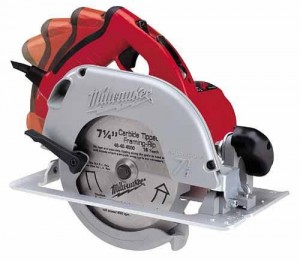
The problem with choosing a circular saw for deck construction is that most buying guides treat every cutting task the same. Ripping a sheet of plywood in a workshop is not the same as trimming joists on a Saturday afternoon with the sun in your eyes and a muddy extension cord tangled around your ankles. Deck building demands a saw that balances power with maneuverability, blade visibility with dust control, and weight with durability. No single saw does all of this perfectly. But a few come close enough to matter.
The top pick for 2026 deck builders is the Skil SPT77W-01 – a worm drive saw that weighs less than you’d expect and cuts straighter than most sidewinders half its age. It lands around $145, which is less than a full tank of gas for some trucks. But the real question is whether you need worm drive torque or sidewinder lightness, cordless freedom or corded reliability.
This guide covers five saws across a range from roughly $59 to $229. Some are best for framing. Others shine during finish work. One of them is probably exactly what your next deck project needs. The rest are worth knowing about so you don’t accidentally buy the wrong tool for the job.
Comparison Table
| Product | Price | Key Strength | Main Drawback | Best Fit | Rating | Link |
|---|---|---|---|---|---|---|
| Skil SPT77W-01 | ~$145 | Worm drive torque, lightweight at 14.2 lbs | Narrower kerf blades can wander in thick lumber | Heavy framing, long rip cuts | 4.8 | Check Price |
| DeWalt DWE575SB | $149 | 8.8 lbs, electric brake, 57° bevel | No onboard wrench storage | All-day use, overhead cuts | 4.8 | Check Price |
| Skil 5280-01 | $59 | 15-amp motor for under $60 | Laser guide drifts after a few jobs | Budget builds, occasional use | 4.7 | Check Price |
| DeWalt DCS565B | ~$131 | Brushless cordless, LED light | 6-1/2″ blade won’t cut 4x material | Job sites without power, light framing | 4.7 | Check Price |
| Milwaukee 2631-20 | $229 | Brute power in cordless, magnesium guards | Bare tool only – no battery included | Pros who already own M18 batteries | 4.6 | Check Price |
Skil SPT77W-01 — The Worm Drive That Changed the Weight Game
Worm drive saws have a reputation. Heavy. Awkward. Beloved by framers who learned on them and tolerated the arm fatigue because the torque was worth it. The Skil SPT77W-01 breaks that trade-off. At 14.2 pounds without the blade and cord, it’s not light. But for a worm drive that delivers the kind of cutting power that laughs through pressure-treated 2x12s, it’s remarkably manageable.
The Dual-Field Motor deserves the credit. It runs cooler than traditional designs, which means longer cuts without the thermal shutdown that plagues cheaper saws. The “Cut Ready” depth adjustment system is one of those features that sounds like marketing until you’re making fifty consecutive crosscuts and the depth stop clicks into place without fiddling.
One annoyance: the price has crept up over the years. When this saw first appeared, it was closer to $120. At roughly $145, it still undercuts most comparable worm drives from Milwaukee and Makita by a significant margin. But it’s no longer a budget secret.
The blade-left orientation is ideal for right-handed users who want to see the cut line without craning their neck. For deck building — where following chalk lines matters more than most tasks — this alone justifies the purchase.
Who gets the most out of it: Anyone framing a deck from scratch. The worm drive gearing delivers torque at lower RPMs, which translates to smoother cuts through dense lumber and less blade deflection when you push hard.
DeWalt DWE575SB — The Sidewinder That Makes You Forget Worm Drive
If the Skil SPT77W-01 represents the worm drive tradition, the DeWalt DWE575SB is the modern sidewinder counterargument. It weighs 8.8 pounds. That is almost six pounds lighter than the Skil. Six pounds is the difference between your shoulder hurting at lunch versus hurting at quitting time.
The electric brake is not optional. It stops the blade within seconds of releasing the trigger, which matters when you’re working on a deck surface and the saw is resting against your knee between cuts. The 15-amp motor is not quite as torque-rich as a worm drive at low speeds, but for 2x framing material common in deck construction, it’s more than adequate.
The 57-degree bevel capacity is unusual. Most saws stop at 50 or 51 degrees. This extra range matters if you’re cutting compound angles for railing posts or stair stringers. The bevel detent stops at 45 degrees click into place with satisfying precision.
One criticism: there is no onboard wrench storage. For a saw in this price bracket ($149), that omission feels like a cost-cutting decision rather than a design choice. You will misplace the included wrench. Buy a spare.
Why buy this over the Skil: If your deck project involves a lot of overhead cutting, ladder work, or long sessions where arm fatigue is the limiting factor, the weight difference alone makes the DeWalt the better choice.
Skil 5280-01 — The Budget Saw That Puts Power First
At $59, the Skil 5280-01 is priced like a weekend warrior special. But the specs read differently. A 15-amp motor spinning at 5,300 RPM puts it in the same power class as saws costing three times as much. The 51-degree bevel capacity with a positive stop at 45 degrees is standard for the category. Nothing exciting. Nothing missing.
The laser guide is the controversial feature. Some buyers love it. Others report that it drifts after a few jobs and requires recalibration. The truth is somewhere in between: the laser is fine for rough alignment but not accurate enough for precision work. If you expect it to replace a chalk line, disappointment awaits. If you treat it as a rough indicator before the blade engages, it saves time.
The dust blower works surprisingly well. On a sunny deck with a breeze, dust collection is irrelevant. But in the garage between rain showers, keeping the cut line visible matters.
The biggest compromise is build quality. The shoe is stamped steel rather than magnesium. The blade guard feels thinner than the DeWalt. These are fair trade-offs at this price point, but they mean the saw will not survive being dropped off a ladder as gracefully as a more expensive option.
Who should buy this: Weekend deck builders who need a functional saw for one or two projects. It cuts well. It cuts straight. And when it eventually wears out, the replacement cost is lower than a decent blade for some premium saws.
DeWalt DCS565B — Cordless Freedom Without the Torque Sacrifice
Cordless circular saws used to mean compromise. Less power. Shorter runtime. Heavier batteries that offset the benefit of no cord. The DeWalt DCS565B changes that equation with a brushless motor that delivers genuinely impressive cuts per charge — up to 368 on a single 20V MAX battery according to DeWalt’s testing.
The 6-1/2-inch blade is the controversial detail. It limits depth of cut to roughly 2 inches at 90 degrees. That is enough for most 2x framing material used in deck construction. It is not enough for 4x posts or beam material. If your deck design calls for cutting 4x4s or thicker lumber, this saw will require two passes. Annoying, but workable.
The LED light is excellent. It casts a shadow directly behind the blade, which makes cut-line visibility better than most worm drives. The tool-free bevel lever adjusts quickly, and the dust chute can connect to a vacuum or collection system — though outdoors, you will likely leave it open.
One practical note: this is a tool-only purchase. No battery included. If you already own DeWalt 20V tools, the entry cost is roughly $131 for the saw. If you are starting from scratch, the DCS590WW1 kit with battery and charger runs around $270.
The real advantage: No extension cords on wet grass. No tripping over cables while carrying lumber. For deck work where power is accessible but inconvenient, cordless freedom pays for itself within the first hour.
Milwaukee 2631-20 — The Premium Cordless That Only Makes Sense If You’re Already Invested
The Milwaukee 2631-20 costs $229. For a bare tool. No battery. No charger. That is more than some complete corded saws with extra blades included. The question is whether the premium is justified.
Yes and no.
The 2631-20 is a 7-1/4-inch brushless saw that runs on Milwaukee’s M18 platform. It delivers power that rivals corded models — enough to cut through stacked decking material without bogging down. The magnesium upper and lower guards are genuinely lighter and more durable than stamped steel. The integrated rafter hook is useful for temporary storage while measuring the next cut. The electric brake stops the blade instantly.
The LED is bright enough to cast usable shadows in direct sunlight, which is rare for cordless saws. The dust port is compatible with Milwaukee’s airlock system, though again, outdoor deck work rarely requires dust collection.
The catch is the battery platform. Anyone who already owns M18 tools will find this saw an easy addition. The total investment is just the saw price, since batteries are already on the charger. For someone new to Milwaukee, the cost of entry is prohibitive — a battery and charger add at least $130 to the total.
Who should skip this: First-time buyers, casual users, or anyone not already committed to the M18 ecosystem. The saw is excellent. The value proposition depends entirely on whether you are paying for just the saw or the saw plus a new battery system.
Buyer’s Guide — What Actually Matters for Deck Construction
Blade-Left vs Blade-Right
The market is split. Most worm drives position the blade on the left (blade-left), which means right-handed users can see the cut line without leaning over the saw. Most sidewinders position the blade on the right (blade-right), which means the saw body blocks the line of sight.
For deck building, where precision cutting along chalk lines is the primary task, blade-left is generally preferred. The Skil SPT77W-01 and the Milwaukee 2631-20 are blade-left. The DeWalt DWE575SB and Skil 5280-01 are blade-right. Neither is wrong. But if you have spent years using one orientation, switching is frustrating.
Worm Drive vs Sidewinder
Worm drive saws place the motor inline with the blade, which creates a longer, narrower profile. They generally offer more torque at lower RPMs, which makes them better for dense materials and long rip cuts. The downside is weight and balance — worm drives are heavier and the weight is distributed further from the grip.
Sidewinders (also called in-line saws) place the motor beside the blade. They are lighter, more compact, and easier to maneuver in tight spaces. For overhead cuts and ladder work, sidewinders are significantly less fatiguing.
For deck construction, either works. The choice depends on whether you value torque and cut-line visibility (worm drive) or weight savings and maneuverability (sidewinder).
7-1/4 Inch vs 6-1/2 Inch Blade
The blade diameter determines maximum depth of cut. A 7-1/4-inch blade cuts roughly 2-1/2 inches deep at 90 degrees. A 6-1/2-inch blade cuts roughly 2 inches. That half-inch difference matters when cutting pressure-treated 4×4 posts or stacked materials.
For standard 2x framing, either size works. For beam and post work, 7-1/4 inches gives you a single-pass capability that the smaller blade cannot match. The trade-off is weight: 6-1/2-inch saws are lighter and the blades are cheaper to replace.
Bevel Capacity
Most saws offer 45 to 51 degrees of bevel capacity. For deck work, you need enough angle to cut stair stringers, railing posts, and angled fascia boards. A saw with a 50-degree or 57-degree bevel gives you room for compound angles without forcing the blade to its mechanical limit.
Positive stops at common angles (45 degrees, 22.5 degrees) are useful but not essential. They save a few seconds per cut. Over the course of a deck build, those seconds add up.
Dust Collection on a Deck
Manufacturers advertise dust collection as a selling point. For indoor work, it matters. For outdoor deck construction, it is almost irrelevant. The dust blower that keeps the cut line visible is more useful than a dust port connecting to a vacuum.
Do not choose a saw based on dust collection features unless you frequently cut treated lumber indoors. (And you should not be cutting treated lumber indoors without respiratory protection, anyway.)
FAQ
What is the best circular saw for deck construction?
The Skil SPT77W-01 is the strongest recommendation for 2026 deck building. It combines worm drive torque with manageable weight, blade-left orientation for cut-line visibility, and a price that undercuts premium competitors by a significant margin. For lighter framing or overhead work, the DeWalt DWE575SB is a strong alternative.
Does blade side matter for cut accuracy?
Yes. Blade-left saws allow right-handed users to see the cut line without leaning over the saw body. This improves accuracy on long rip cuts and chalk line following. Blade-right saws require the user to lean or rely on a notch guide. Neither is inherently more accurate, but most users find one orientation more natural than the other.
What features should you look for in a durable saw?
Magnesium shoes and guards resist corrosion better than stamped steel, which matters when working with pressure-treated lumber and wet conditions. Electric brakes improve safety and reduce wear on the blade and motor. Brushless motors last longer than brushed equivalents, particularly in cordless models where heat management is critical.
How do corded vs cordless circular saws compare for heavy use?
Corded saws offer consistent power without runtime limitations. They are lighter because they carry no battery. Cordless saws offer mobility and convenience, particularly on sites without reliable power access. For full-day deck framing with a crew, corded remains more practical. For solo work on a residential deck, cordless freedom often outweighs the minor power difference.
Which brands offer the best value between Skil, Milwaukee, and DeWalt?
Skil offers the best price-to-performance ratio, particularly for corded saws. DeWalt offers the widest range across corded and cordless platforms with consistent quality. Milwaukee offers premium performance at a premium price, best justified if already invested in the M18 battery system. For budget-conscious buyers, Skil is the clear winner.
What is the difference between worm drive and sidewinder circular saws?
Worm drive saws have an inline motor that delivers higher torque at lower RPMs through geared reduction. They are heavier and the weight is positioned further from the grip. Sidewinders have the motor mounted beside the blade, making them lighter and more compact. Worm drives excel at long rip cuts and dense lumber. Sidewinders excel at maneuvering and overhead work.
How does battery platform compatibility affect long-term ownership costs?
Choosing a cordless saw locks you into a battery platform. If you already own tools from a specific brand, buying the same platform is economical because batteries and chargers are shared. If you are starting fresh, the initial investment in batteries and charger can exceed the cost of the saw itself. Consider the full ecosystem cost, not just the saw price.
Which circular saw is best for beginners on a budget?
The Skil 5280-01 at $59 offers genuine 15-amp power at a price that leaves room to buy a quality blade and still spend less than $100 total. The laser guide is a useful training tool for new users, even though experienced users tend to disable or ignore it. The stamped steel shoe and plastic handle are not premium, but they are functional enough to build confidence before upgrading.