The problem with air mattresses isn’t that they’re uncomfortable. It’s that most people discover what makes them uncomfortable after they’ve already bought one.
You pick something off the shelf thinking “it’s an inflatable bed, they’re all basically the same.” Then three hours into the night, your hips have settled into a depression, your lower back is arching in a way it shouldn’t, and you’re seriously considering sleeping on the floor instead.
That’s the real air mattress experience for most people with back pain.
But it doesn’t have to be. The 2026 generation of air mattresses has quietly gotten much better—especially for guests who wake up stiff. The difference usually comes down to three things: internal support structure, surface material, and whether the manufacturer actually tested for leaks rather than just hoping for the best.
After sorting through the options, one mattress clearly handles back pain better than anything else in this roundup. The KINGJERRY Queen Air Mattress with Built-in Pump ($214.99) does something most inflatable beds don’t: it actually feels like a real mattress rather than a balloon covered in fabric.
The rest of the field ranges from surprisingly decent budget options to models that are fine for camping but will leave your guest regretting the visit.
The Best Air Mattress for Back Pain in 2026
KINGJERRY Queen Air Mattress with Built-in Pump
Check price on Amazon | Rating: 4.9 | $214.99
Here’s what makes the KINGJERRY different: it has a certified memory foam topper bonded to the surface. Not a thin flocked layer. Not a quilted pad that shifts around. Actual foam that stays put.
Most air mattresses give you one type of support—air pressure. And air pressure is a terrible proxy for proper spinal alignment because it distributes unevenly. Your hips and shoulders sink. Your lower back gets suspended with nothing under it. By morning, you feel like someone folded you in half.
The KINGJERRY solves this by adding a layer that actually conforms to the body. The foam topper distributes weight more evenly across the surface, which means less pressure on the lumbar curve. For anyone who already deals with back issues, this is the difference between waking up sore and waking up functional.
The 18-inch height is standard for premium models, which means getting in and out doesn’t feel like climbing out of a hole. The built-in pump inflates in about three minutes. The 900-pound weight capacity is overkill for most people, but it does suggest the internal seams are built to handle real stress.
One thing that stands out about this model is the silk-feel cover. It’s removable and washable. That matters more than most buyers realize—air mattresses trap heat and sweat, and a non-washable surface starts to smell unpleasant after a few uses. The KINGJERRY’s cover can be thrown in the washing machine, which is a genuinely practical feature for a guest bed.
The only real drawback is price. At $214.99, it’s roughly two to three times the cost of a basic queen air mattress. But for back pain specifically, the foam topper eliminates the main complaint people have about inflatable beds. If you’re hosting guests with chronic back issues, or if you’re buying for your own occasional use, this is the one to get.
Who should buy it: Anyone who expects their guests to wake up without back pain. Hosts who want their spare room to actually feel like a guest room rather than camping.
The Honorable Mentions
Tencity 20″ Tall Luxury Air Mattress with Quilted Foam Topper
Check price on Amazon | Rating: 4.5 | $169.99
If the KINGJERRY didn’t exist, the Tencity would be the recommendation. It’s also a foam-topper model, but the foam is quilted rather than a solid layer. The support is good but not quite as evenly distributed as the KINGJERRY.
The 20-inch height is genuinely useful. Getting out of a low bed when your back is stiff is an ordeal. The Tencity is tall enough that most people can sit on the edge and stand up without groaning. The U-shaped PVC strap system inside does a reasonable job of maintaining shape through the night, though it’s not as refined as the KINGJERRY’s internal structure.
The main complaint with this model is surface heat retention. The quilted foam topper runs slightly warm compared to the KINGJERRY’s breathable cover. Not a dealbreaker in cool climates, but worth noting if you’re in a warmer region or your guest tends to sleep hot.
Who should buy it: People who want foam-topper support but need to save about $45. Taller guests who appreciate the extra height.
SoundAsleep Dream Series Luxury Air Mattress
Check price on Amazon | Rating: 4.4 | $149.95
The SoundAsleep Dream Series has been a reliable name in air mattresses for years. It doesn’t have a foam topper, but it uses ComfortCoil Technology—forty internal air coils that create a more structured support surface than the open-chamber designs found in cheaper models.
For back pain, this is a compromise. The coil system does reduce the “hammock effect” where the middle of the mattress sags. It provides more consistent support than a basic air mattress. But it’s still air, not foam. If your guest has significant lumbar issues, they’ll notice the difference between this and the KINGJERRY.
Where the SoundAsleep shines is reliability. This is a proven design with years of user feedback behind it. The built-in pump is quieter than most. The flocked top is soft without being hot. It holds air well overnight, which is more than can be said for many budget models.
The price point is reasonable for what you get. It’s not cheap, but it’s not premium either. The SoundAsleep sits in that sweet spot where you’re paying for quality engineering rather than features.
Who should buy it: Hosts who want a dependable, middle-ground option. Guests with mild back discomfort rather than chronic conditions.
King Koil 20″ Full Air Mattress
Check price on Amazon | Rating: 4.4 | $131.89
The King Koil has something unusual going for it: the International Chiropractors Association endorsement. That doesn’t automatically mean it’s good for back pain, but it does mean the design was reviewed by people who spend their careers thinking about spinal alignment.
The internal construction uses horizontal I-beam support rather than vertical coils. This creates a different kind of stability—the mattress doesn’t bulge outward as much when inflated, and the surface stays flatter under weight. For side sleepers especially, this makes a noticeable difference in hip alignment.
The 600-pound weight capacity is adequate for most couples but lower than the premium options. The built-in pump inflates in about two minutes, which is genuinely fast. The 20-inch height matches the Tencity for accessibility.
Where this mattress falls short is surface comfort. The flocked top is standard rather than premium. It’s not uncomfortable, but it doesn’t have the plush feel of the foam-topper models. For someone with back pain who’s used to a good mattress at home, this will feel like a clear step down.
Who should buy it: Budget-conscious buyers who still want spinal support features. Campers who need something that packs down small but offers decent back support.
The Budget Contenders
Sebor Queen Air Mattress with Built-in Pump
Check price on Amazon | Rating: 4.7 | $75.99
The Sebor is surprisingly good for $76. It has a patented internal structure that uses reinforced PVC walls to create separate support zones. The effect is similar to the SoundAsleep’s coil system but at roughly half the price.
The flocked top is soft enough. The 18-inch height is standard. The built-in pump is loud but fast. For someone who sleeps on their stomach or back without major spinal issues, this mattress is perfectly adequate.
For back pain, though, it’s a mixed bag. The PVC walls do provide structure, but the surface itself is still a thin flocked layer over air. There’s no foam, no padding, no contouring. If your guest wakes up stiff, this mattress won’t help. It won’t make things worse than a bad hotel bed, but it won’t improve the situation either.
The real appeal here is value. If you’re buying for occasional use and your guests don’t have specific back issues, the Sebor is more than enough. It’s also lightweight and comes with a carry bag, making it practical for camping or travel.
Who should buy it: Casual hosts on a tight budget. Campers who need something packable. Guests with no existing back problems.
CHERIMOR Queen Air Mattress (Two Versions)
Check price on Amazon | Rating: 4.6 | $89.99
Check price on Amazon | Rating: 4.4 | $69.98
The CHERIMOR line is interesting because there are two very similar models at different price points. The more expensive version ($89.99) uses honeycomb pillar support and claims 800-pound capacity. The cheaper version ($69.98) is essentially the same design with fewer internal pillars.
Both use a velvety flocked top that looks more like a pillow-top mattress than a typical air bed. The visual effect is impressive for the price. The surface does feel softer than standard flocking.
For back pain, the honeycomb pillar design is better than open-chamber construction but not as effective as coil systems or foam toppers. The pillars prevent major sagging but don’t provide the kind of contouring that helps with pressure points.
The leak-proof testing at 48 hours is a nice touch. Many budget mattresses skip this step, and the result is gradual deflation over the night. The CHERIMOR holds air well, which is the bare minimum for a decent night’s sleep.
Who should buy it: Buyers who want a pillow-top look without spending premium money. People who prioritize air retention over contour support.
The Ones to Skip (For Back Pain)
Intex 64449ED Dura-Beam Deluxe Plush
Check price on Amazon | Rating: 4.4 | $89.99
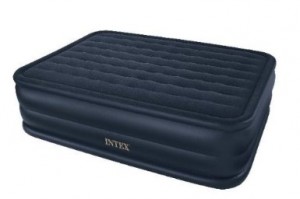
The Intex Dura-Beam series is fine for general use. It’s well-made, reasonably comfortable, and widely available. But for back pain specifically, it doesn’t offer anything special. The dual-layer air pocket system is better than a basic inflatable, but it’s still just air chambers under a flocked surface.
The headboard is a nice aesthetic touch but doesn’t affect support. At 600 pounds capacity, it’s middle-of-the-road. The Intex is the default option when you need something decent and don’t want to think about it. It’s not bad. It’s just not aimed at solving back problems.
VOSSER Queen Air Mattress
Check price on Amazon | Rating: 4.4 | $69.99
VOSSER is an ISPA member, which means they follow industry standards for bedding. That’s a mark of quality for traditional mattresses, but it doesn’t translate to air mattress innovation. This is a standard I-beam design with a flocked top. Nothing wrong with it. Nothing special for back pain.
GETFITREST Queen Air Mattress
Check price on Amazon | Rating: 4.7 | $89.99
GETFITREST markets itself on durability—8,000 roller tests and 800-pound capacity. That’s impressive for heavy use, but durability isn’t the same as comfort. The vertical air coils provide structure but not contouring. This is a good mattress for a basement guest room where it will see heavy use. Not the best choice for back pain relief.
Prosenses Queen Air Mattress
Check price on Amazon | Rating: 4.6 | $89.99
The Prosenses uses horizontal I-beam support similar to the King Koil. It’s a solid design for the price. The breathable flocked top is a nice touch. But again, no foam, no contouring. For back pain, it’s better than nothing but not a solution.
ooiloln AAA16
Check price on Amazon | Rating: 4.4 | $49.71
At $50, this is the cheapest option. The 16-inch height is lower than standard. The flocked cover is basic. The weight capacity is 660 pounds, which is decent for the price. But the internal construction is simple, and the leak-testing claims are hard to verify at this price point.
This is the mattress you buy when you need something for one night and don’t care about the consequences. Not recommended for anyone with back issues.
Comparison Table
| Product | Price | Key Strength | Main Drawback | Best Fit | Rating |
|---|---|---|---|---|---|
| KINGJERRY Queen | $214.99 | Memory foam topper for spinal contouring | High price | Guests with chronic back pain | 4.9 |
| Tencity Luxury 20″ | $169.99 | Quilted foam topper, 20″ height | Heat retention | Budget foam-seekers, tall guests | 4.5 |
| SoundAsleep Dream Series | $149.95 | 40-coil ComfortCoil system, proven reliability | No foam layer | Guests with mild back issues | 4.4 |
| King Koil 20″ | $131.89 | Chiropractor endorsement, I-beam support | Basic surface comfort | Budget with spinal support focus | 4.4 |
| Sebor Queen | $75.99 | Patented structure at low price | No contouring | Casual use, no back issues | 4.7 |
| CHERIMOR (honeycomb) | $89.99 | Pillow-top look, good air retention | Limited contouring | Visual appeal seekers | 4.6 |
Buyer’s Guide: What Actually Matters for Back Pain
Internal Structure Is Everything
The biggest mistake people make is assuming all air mattresses support the body the same way. They don’t.
Open chamber designs are the cheapest. One big air pocket. When you lie down, air shifts toward the edges, creating a hammock effect. Your hips sink. Your lower back arches. This is the worst option for back pain.
Vertical coil systems (like SoundAsleep’s ComfortCoil) create multiple columns of air that resist lateral shifting. Better than open chambers. Reduces the hammock effect. Still doesn’t contour.
Horizontal I-beam structures (like the King Koil and Prosenses) use cross-braces to keep the mattress shape flatter. Good for side sleepers. Not as good for pressure relief.
Foam toppers (like the KINGJERRY and Tencity) add an actual layer of material that conforms to the body. This is the closest you’ll get to a real mattress experience. For back pain, this is the only option that properly addresses pressure points.
Flocked Top vs. Smooth
Flocked tops feel softer and warmer. Smooth surfaces are cooler and easier to clean. For back pain, flocked tops are generally preferred because they reduce skin friction and make it easier to shift positions during the night.
That said, not all flocking is equal. Cheap flocking wears off after a few uses. Premium flocking (like on the SoundAsleep) stays soft longer. Foam toppers don’t have this issue because they’re covered by fabric rather than flocked material.
Height Matters More Than You Think
Standard air mattresses are 13 to 18 inches tall. The difference doesn’t sound significant, but for someone with back pain, getting out of a low bed requires bending at the waist—exactly the motion that hurts.
18 inches is the minimum for a comfortable experience. 20 inches (like the Tencity and King Koil) is better. The 16-inch models (like the ooiloln) are noticeably harder to exit.
Weight Capacity and Leak Testing
Weight capacity tells you about internal seam strength, not comfort. A 900-pound capacity mattress doesn’t sleep better than a 600-pound one—it just doesn’t burst as easily.
Leak testing is more important. A mattress that loses pressure overnight will sag by morning, which is terrible for back pain. Look for models that advertise “48-hour leak-proof testing” or similar. The CHERIMOR and KINGJERRY both do this. Budget models often skip it.
The Built-In Pump Question
All the mattresses in this guide have built-in pumps. That’s the standard in 2026. External pumps are slower and easier to lose. If you’re buying a pump-separate model, consider whether you’ll remember where the pump is next time you need it.
Pump noise is a real concern if guests sleep nearby. The SoundAsleep is notably quiet. The Sebor is louder. If noise is an issue, prioritize quieter models.
FAQ
Can air mattresses cause back pain?
Yes, especially if the mattress lacks proper internal support. Open-chamber designs allow the body to sink unevenly, which strains the lower back. Models with foam toppers or coil systems significantly reduce this risk. If you already have back issues, choose a mattress with contouring features rather than a basic inflatable.
What is the best air mattress for someone with chronic back pain?
The KINGJERRY Queen with memory foam topper is the clear answer. The foam layer provides the closest approximation to a real mattress, reducing pressure points and maintaining spinal alignment throughout the night. No other air mattress in this price range achieves the same result.
How do I maintain an air mattress for guests with back issues?
Keep it inflated at the recommended pressure. Under-inflation causes sagging, which worsens back pain. Store it clean and dry to prevent material degradation. Washable covers (like the KINGJERRY’s) should be cleaned after each use to maintain hygiene.
Is a thicker air mattress better for back pain?
Generally yes, but only if the thickness comes from proper internal structure rather than just more air. A 20-inch mattress with foam topper is better than a 20-inch mattress with open chambers. The thickness helps with entry/exit ease, but the internal design determines comfort.
Can I use a regular mattress topper on an air mattress?
You can, but it’s not ideal. Standard toppers shift around on the slick surface of an air mattress. Integrated foam toppers (like the KINGJERRY) are attached to the mattress itself, so they stay in place. If you’re adding a separate topper, look for one with a non-slip backing.
The mattress you actually use every night isn’t usually the most expensive one in the store. But for back pain specifically, the extra money for a foam topper model buys real relief. The KINGJERRY earns its price because it solves the problem most air mattresses ignore: that air pressure alone can’t support a spine properly.
For everyone else—casual hosts, campers, people with guests who don’t have back issues—the Sebor or SoundAsleep will do the job. Just don’t expect them to feel like a real bed. That’s not what they’re designed for.