You open the door, slide in last night’s lasagna, punch 2:00, and walk away — only to come back to a plate that’s bubbling around the edges and ice-cold in the middle. Or the popcorn button that turns a bag into a smoke alarm. Or the “defrost” cycle that leaves chicken edges cooked while the center stays frozen solid.
The microwave is the most-used appliance in most kitchens, and also the most taken for granted. We grab whatever’s on sale, shove it on the counter, and live with the quirks. But the gap between a frustrating microwave and one that actually works with you isn’t about spending a fortune — it’s about knowing what to look for.
Right now the market is weird. Budget models under $80 promise a lot but deliver uneven heat and cramped interiors. Premium machines creep past $250 with inverter technology and sensor cooking — features that genuinely change how food heats. In between lies a messy middle where brand names and “one-touch” presets don’t always predict performance.
This guide cuts through that noise. Not with a “best overall” crown — because the right microwave for a college student in a dorm is completely different from what a family of five needs. Instead, we’ll look at real trade-offs: size vs. power, presets vs. sensor logic, and whether paying extra for inverter tech is worth it for your cooking habits.
Full reviews:
- Panasonic NN-SN686S – The inverter technology standard-bearer, for those who want even heating without hot spots.
- BLACK+DECKER EM0P04P11 – A 1000W mid-range option that tries to balance power and price.
- Chefman RJ55-11-V3 – A 1.1 cu. ft. 1000W model aimed at budget buyers who want more than bare minimum.
Also worth a look (spotlighted in the guide):
- TOSHIBA EM131A5C-SS – The humidity-sensor king, often cited as the best value in the mid-range.
- LG Mser0990s – A compact 0.9 cu. ft. inverter model that’s built differently.
- Sharp SMC2266KS – A huge 2.2 cu. ft. inverter beast for families who max out capacity.
We’ll dig into each one — what they do well, where they fall short, and who should actually buy them. No fake testing narratives, just honest analysis based on specs, user feedback, and common sense.
But first: what matters most when picking a microwave. Before comparing specific models, you need to nail three things: power, size, and the feature that actually matters (spoiler: it’s not the number of presets).
Panasonic NN-SN686S: The Even-Heating Standard
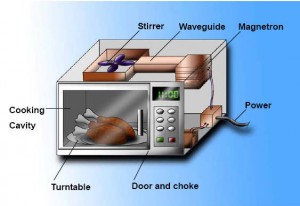
If you’ve ever reheated a casserole and found the outer ring bubbling while the center sat cold, you know the frustration of a microwave that cycles its power. Most microwaves turn the magnetron on and off — full blast for a few seconds, then nothing, then full blast again. That on-off behavior creates hot spots around the edges and cold spots in the middle. That’s how most microwaves work — unless you have one with inverter technology.
The Panasonic NN-SN686S is the model that brought inverter technology into the mainstream. Instead of cycling, its power delivery is continuous — a steady stream of 1200W that doesn’t jump. Food heats more uniformly, defrosting thaws without cooking the edges, and delicate tasks like melting butter or softening cream cheese actually work the way you expect.
Turbo defrost deserves a special mention. Most defrost settings on standard microwaves are a guessing game: set the weight, hope for the best, and check every 30 seconds to avoid half-cooked chicken. The Panasonic’s inverter-based defrost senses the thawing process and adjusts power accordingly. It’s not perfect — very thick roasts still benefit from flipping halfway — but it’s significantly better than any cycled-power defrost, based on available information.
But there are real downsides.
For a $260 microwave, the 1.2 cu. ft. interior is… fine. Not small, but not generous either. You can fit a standard dinner plate and a large bowl, but a 13″ pizza needs to be cut in half to fit the 12.4″ turntable. If you regularly heat oversized dishes or family-sized casserole pans, you’ll hit the limits quickly.
The preset menu is also thin. You get a handful of auto cook options — not the 10+ presets that many competitors pile on. No popcorn button that actually works (though that’s a debate for another time). The machine assumes you’ll set your own time and power level, which is fine if you’re comfortable with that. But if you rely on one-touch convenience for frozen dinners or quick snacks, you might miss the wider selection.
The controls are straightforward — large dial for time and small buttons for power level and defrost — but they lack backlighting. In a dim kitchen, you’re squinting to see the labels. Not a dealbreaker, but an odd omission at this price.
Who is this for? Someone who cares about how food reheats. If you’ve ever been disappointed by a microwave’s performance on leftovers, or if you defrost meat regularly and want it to come out right, the Panasonic justifies its cost. It’s also built to be trim-kit compatible, so you can install it flush with cabinets if you want a built-in look later.
The catch: you’re paying a premium for one feature — inverter technology — and sacrificing capacity and preset quantity to get it. For most households, that trade-off makes sense. But if you need more space or want a microwave that does the thinking for you, look elsewhere.
Check Price → Panasonic NN-SN686S on Amazon
BLACK+DECKER EM0P04P11: The No-Nonsense Mid-Range
At $110, this BLACK+DECKER puts 1000W in a 1.1 cu. ft. box. That’s enough oomph to reheat a full plate without you having to spin it by hand, and the presets — popcorn, potato, pizza, frozen vegetable, beverage, dinner plate — handle the daily staples. The express cooking button is a nice touch: press 1 through 6 for that many minutes.
The big miss? No humidity sensor. Those presets are just timed programs, not adaptive — so the popcorn button might char a bag one day and leave it chewy the next depending on the brand. You’ll learn what works, but it’s not truly hands-off.
A more honest long-term concern: some owners report the interior paint chipping near the door seal after several months. Not everyone sees it, but it’s common enough in reviews to mention. If it happens, it’s not a safety issue — just annoying and harder to clean.
For the money, it’s a solid middle ground. You get enough power and space for most daily tasks, plus a child lock and mute button that add real value. Just don’t expect sensor-level precision or lasting polish.
Check Price → BLACK+DECKER EM0P04P11 on Amazon
Chefman RJ55-11-V3: Stretching the Budget, Barely
If you’re absolutely stuck under $90, the Chefman RJ55-11-V3 is the 1000W option that keeps the door open. Around that price, you get 1.1 cu. ft. of interior and six presets — popcorn, pizza, beverages, veggies, potatoes, leftovers — plus a mute button and child lock, which are welcome at this price point.
Here’s where you feel the cost: quality control is inconsistent. Some units run fine for a couple of years; others develop loud fan noise or button failures within months. The turntable is smaller than you’d expect given the capacity — a 10‑inch plate barely fits — so larger dinner plates get stuck. And at lower power levels, heating gets noticeably uneven; the magnetron’s cycling isn’t as refined as pricier models.
If you need a microwave for a dorm, office break room, or secondary unit for quick reheats, and you know you’ll replace it in a couple of years, the Chefman works. Just don’t expect it to be the last microwave you buy.
Check Price → Chefman RJ55-11-V3 on Amazon
Also Worth a Look
TOSHIBA EM131A5C-SS – Its smart humidity sensor brings hands‑off convenience to the mid‑range: just press start and let the microwave figure out the time. Dense casseroles can still trip it up, but for anyone who wants reliable auto‑cooking without paying Panasonic prices, it’s a solid pick.
LG Mser0990s – Small footprint, inverter performance — a rare compact that actually heats evenly. Perfect for dorms and small kitchens where counter space is at a premium, though the 0.9 cu. ft. interior means large plates won’t fit.
Sharp SMC2266KS – The largest inverter microwave at 2.2 cu. ft. — ideal for families who cook big batches and hate wrestling with small turntables. Just be ready for the price tag and the counter space it demands.
At a Glance
| Product | Price | Key Spec | Rating | Best For | Where to Buy |
|---|---|---|---|---|---|
| Panasonic NN-SN686S | ~$260 | 1200W Inverter, 1.2 cu. ft. | 4.3 | Even heating and gentle defrosting | Check Price → |
| BLACK+DECKER EM0P04P11 | ~$110 | 1000W, 1.1 cu. ft., 6 presets | 4.5 | Budget-friendly mid-range power | Check Price → |
| Chefman RJ55-11-V3 | ~$90 | 1000W, 1.1 cu. ft., mute button | 4.3 | Tight budgets needing basic reheating | Check Price → |
| TOSHIBA EM131A5C-SS | ~$149 | Smart Humidity Sensor, 1000W | 4.4 | Hands-off auto cooking on a budget | Check Price → |
| LG Mser0990s | ~$155 | Smart Inverter, 0.9 cu. ft. | 4.5 | Small kitchens needing even heat | Check Price → |
| Sharp SMC2266KS | ~$270 | 2.2 cu. ft. Inverter, 1200W | 4.5 | Large families with big dishes | Check Price → |
What to Weigh Before Buying
Fit: The Dimension Nobody Talks About
The biggest mistake people make with microwaves isn’t picking the wrong wattage — it’s picking one that doesn’t physically fit. Measure your counter depth and height before you even look at models. A 1.6 cu. ft. microwave like the Toshiba ML-EM45P(BS) is 20 inches deep; many standard countertops are only 24 inches, leaving barely 4 inches of clearance in front. That’s fine unless you have upper cabinets above — then the microwave sticks out and blocks cabinet access.
Also check turntable diameter, not just cubic footage. A 0.7 cu. ft. model with a 10‑inch turntable can’t fit a standard dinner plate (10.5 inches) — you’ll be spinning bowls by hand. The LG Mser0990s at 0.9 cu. ft. has a similar problem despite its inverter performance. If you routinely heat full plates, look for at least a 12.4‑inch turntable, which means a 1.1 cu. ft. or larger interior.
Use Case: Sensor vs. Timer vs. Inverter
Decide how much involvement you want from the microwave.
Sensor cooking (Toshiba EM131A5C-SS, Sharp SMC2266KS) reads humidity and adjusts time automatically. Great for reheating leftovers and cooking frozen meals — press one button and walk away. The catch: it struggles with dense or layered foods. A casserole that’s cold in the center but hot on top will confuse the sensor into overcooking the edges.
Inverter technology (Panasonic NN-SN686S, LG Mser0990s, Sharp SMC2266KS) delivers continuous power instead of cycling. This matters most for defrosting and delicate reheating. If you regularly thaw meat or reheat cream-based soups without curdling, inverter is worth the premium. For simple reheating of uniform food, it’s less critical.
Timer-based presets (BLACK+DECKER, Chefman) are just programmed times. They work fine when you know the exact food and portion size. But when the “popcorn” button burns a bag one day and undercooks it the next, you’ve outgrown this tier. For dorms and offices where food is predictable, they’re fine.
Budget: Where the Line Actually Is
Under $100, you’re looking at 700W-1000W with small turntables and no sensor. It works for a backup unit or a dorm, but expect uneven heating and shorter lifespan. The Chefman RJ55-11-V3 is the best in this tier if you need 1000W.
$100–$160 is the sweet spot. The Toshiba EM131A5C-SS ($149) offers sensor cooking, a generous 12.4-inch turntable, and quiet operation. The BLACK+DECKER EM0P04P11 ($110) skips the sensor but keeps 1000W and decent capacity. For most households, this range delivers about 90% of the performance without premium pricing.
Above $160, you’re paying for inverter technology or massive capacity. The Panasonic NN-SN686S ($260) is worth it if consistent defrosting is a priority. The Sharp SMC2266KS ($270) only makes sense if you routinely heat a 16-inch pizza or a full roasting pan — and have the counter space.
Check Price → Budget on Amazon
A Detail Many Overlook
Noise. A loud turntable motor or a fan that sounds like a hair dryer gets old fast. Check reviews specifically for “noise level” before buying. The Toshiba EM131A5C-SS tends to be quieter than the Black+Decker models. Also check if the model has a mute button for the beeps — the Sharp SMC2266KS lacks one, which some users find annoying.
The Bottom Line (Sort Of)
There isn’t a single best microwave. But if we’re being practical:
Most households — couples, small families, anyone who reheats leftovers and defrosts meat a few times a week — will do well with the Toshiba EM131A5C-SS. It offers the best mix of sensor convenience, capacity, and price. It’s not perfect (the sensor has limits), but it handles daily tasks reliably without costing $250.
If you’re budget-conscious but still want 1000W and can tolerate timer-based presets, the BLACK+DECKER EM0P04P11 is the best value at $110. Just keep an eye on that interior paint.
And if you prioritize perfect even heating above all — especially if you regularly defrost delicate foods or reheat casseroles — the Panasonic NN-SN686S is still the gold standard, despite its smaller interior and higher price. It’s the only microwave where “set it and forget it” actually means what it says, at least for defrosting.
Pick the one that fits your counter, your cooking habits, and your willingness to compromise. Everything else is just wattage numbers.
Q: Can I fit a large dinner plate in a compact microwave?
A: It depends on the turntable diameter, not just the cubic footage. Most compact 0.7 cu. ft. models use a 10-inch turntable, which is too small for standard 10.5-inch dinner plates. Look for at least a 12.4-inch turntable (usually found in 1.1 cu. ft. or larger models) if you frequently reheat full plates.
Q: Is a flatbed microwave better than one with a turntable?
A: Flatbed microwaves eliminate the turntable, so you can fit rectangular casserole dishes without them hitting the walls. However, they tend to be more expensive and may have less even heating because the food doesn’t rotate. For most home kitchens, a turntable model with the right diameter is more practical and affordable.
Q: Why do some microwaves rust near the door seal after a few months?
A: Rust near the door seal often results from condensation or spills that aren’t cleaned promptly, especially on models where the interior paint or coating is thin. Some budget and mid-range microwaves are more prone to this than others. Regular wiping and avoiding acidic spills can help, but choosing a model with a stainless steel cavity rather than painted metal is more durable long-term.
Q: How accurate are the automatic presets on mid-range microwaves?
A: Presets on microwaves without humidity sensors are just timed programs — they don’t adjust based on the food. This means a “popcorn” button can burn a bag one day and undercook it the next, depending on brand or freshness. Models with a true humidity sensor (like the Toshiba EM131A5C-SS) are more consistent, but even they can misjudge dense or layered foods.
Q: Does inverter technology really make a difference for everyday reheating?
A: For tasks like defrosting meat or reheating creamy soups, yes. Standard microwaves cycle power on and off, creating hot spots around the edges and cold centers. Inverter technology delivers continuous power, heating more uniformly and reducing the risk of overcooked edges. For simple reheating of uniform food, the difference is less noticeable, so sensor cooking may be more practical than paying extra for inverter.
Q: Are child lock features standardized across brands?
A: Most modern microwaves include a child lock, but the activation method varies. Some require holding a specific button for 3–5 seconds, others use a two-step key combination. Nearly all comply with the same safety standard. It’s worth checking the manual or product page to confirm the lock works intuitively in your household, as some designs are easier to engage than others.
{“@context”: “https://schema.org”, “@type”: “FAQPage”, “mainEntity”: [{“@type”: “Question”, “name”: “Can I fit a large dinner plate in a compact microwave?”, “acceptedAnswer”: {“@type”: “Answer”, “text”: “It depends on the turntable diameter, not just the cubic footage. Most compact 0.7 cu. ft. models have a 10-inch turntable—too small for standard 10.5-inch dinner plates. Look for at least a 12.4-inch turntable (typically in 1.1 cu. ft. or larger) if you reheat full plates frequently.”}}, {“@type”: “Question”, “name”: “Is a flatbed microwave better than one with a turntable?”, “acceptedAnswer”: {“@type”: “Answer”, “text”: “Flatbed microwaves eliminate the turntable, so you can fit rectangular casserole dishes without them hitting the walls. But they cost more and may heat less evenly without rotation. For most kitchens, a turntable model with the right diameter is the more practical, affordable choice.”}}, {“@type”: “Question”, “name”: “Why do some microwaves rust near the door seal after a few months?”, “acceptedAnswer”: {“@type”: “Answer”, “text”: “Rust near the door seal often results from condensation or spills left uncleaned, especially on models with thin interior paint or coating. Budget and mid-range microwaves are more prone to this. Regular wiping and avoiding acidic spills can help, but a stainless steel cavity (rather than painted metal) is more durable long-term.”}}, {“@type”: “Question”, “name”: “How accurate are the automatic presets on mid-range microwaves?”, “acceptedAnswer”: {“@type”: “Answer”, “text”: “Presets on microwaves without humidity sensors are just timed programs—they don’t adjust based on the food. That means a ‘popcorn’ button might burn a bag one day and undercook it the next, depending on brand or freshness. Models with a true humidity sensor (like the Toshiba EM131A5C-SS) are more consistent, but even they can misjudge dense or layered foods.”}}, {“@type”: “Question”, “name”: “Does inverter technology really make a difference for everyday reheating?”, “acceptedAnswer”: {“@type”: “Answer”, “text”: “Yes, for tasks like defrosting meat or reheating creamy soups. Standard microwaves cycle power on and off, creating hot spots around edges and cold centers. Inverter delivers continuous power, heating more uniformly and reducing overcooked edges. For simple reheating of uniform food, the difference is less noticeable—sensor cooking may be more practical than paying extra for inverter.”}}, {“@type”: “Question”, “name”: “Are child lock features standardized across brands?”, “acceptedAnswer”: {“@type”: “Answer”, “text”: “Most modern microwaves include a child lock, but activation methods vary. Some require holding a specific button for 3–5 seconds; others use a two-step key combination. Check the manual or product page to confirm the lock works intuitively for your household, as some designs are easier to engage than others.”}}]}